

One architecture. Every kind of operation.
E.L.E.V.A.T.E. is modular. The same front-of-house, back-of-house and P&L components are configured for an enterprise, a dining room, a dispatch desk or a job site.
The business changes. The architecture does not.
Every operation, whatever it sells, does the same handful of things. It takes a booking, an order or an inquiry. It schedules people and resources to deliver. It uses up stock, materials or hours. And it needs to know whether the work made money. E.L.E.V.A.T.E. treats each of those as a module. We switch on the ones your workflow needs, shape them to your terms, and host the result ourselves.
Locally hosted means exactly that: the system runs on infrastructure Elevated Marketing owns and operates, our own servers in multiple sites rather than rented SaaS, or on hardware in your own building where the work calls for it. It is why the fees third-party platforms attach to a booking, an order or a seat are not part of the design.
Which modules matter where.
The marks describe a typical build, not a rule. Workflow mapping decides the final set.
| Capability | EnterpriseEnt. | HospitalityHosp. | Home servicesHome | ConstructionConstr. |
|---|---|---|---|---|
| Front of house | ||||
| Reservations and booking | As needed | Core | Core | As needed |
| Ordering and POS | As needed | Core | As needed | Not typical |
| Customer portals | Core | As needed | Core | Core |
| Lead capture and attribution | Core | As needed | Core | Core |
| Back of house | ||||
| Kitchen or job execution | As needed | Core | Core | Core |
| Scheduling and dispatch | Core | Core | Core | Core |
| Inventory and resource allocation | Core | Core | As needed | Core |
| In every build | ||||
| Real-time P&L telemetry | Core | Core | Core | Core |
| Locally hosted infrastructure | Core | Core | Core | Core |
| Defcon-One security baseline | Core | Core | Core | Core |
| Growth Engine search acquisition | As needed | Core | Core | Core |
Universal Enterprise Operations
For organizations with several departments, locations or lines of business that have grown a different tool for each. The work here is consolidation: one custom enterprise operating system in place of software that was never designed to share data.
Customer intake, internal scheduling and resource planning move onto one set of records, so a request raised in one department is visible to the one that has to deliver it.

What your customers touch
- Customer portals for accounts, orders, documents and service requests
- Lead capture and intake forms, routed to the right team with the source attached
- Booking for appointments, rooms, equipment or site visits
What your staff run
- Scheduling across teams and locations
- Resource allocation for people, equipment and inventory
- Job execution with tasks, approvals and status in one place
Fewer vendors in the path
Per-seat CRM and form subscriptions, separate hosting and security vendors, and the connector tools that exist only to move data between them. One system on servers we operate replaces the set, and data no longer passes through outside vendors to get from one department to another.
One set of numbers
Revenue and cost by location, department and line of business in one current view, built on the same definitions everywhere, so two managers are never arguing from two spreadsheets.
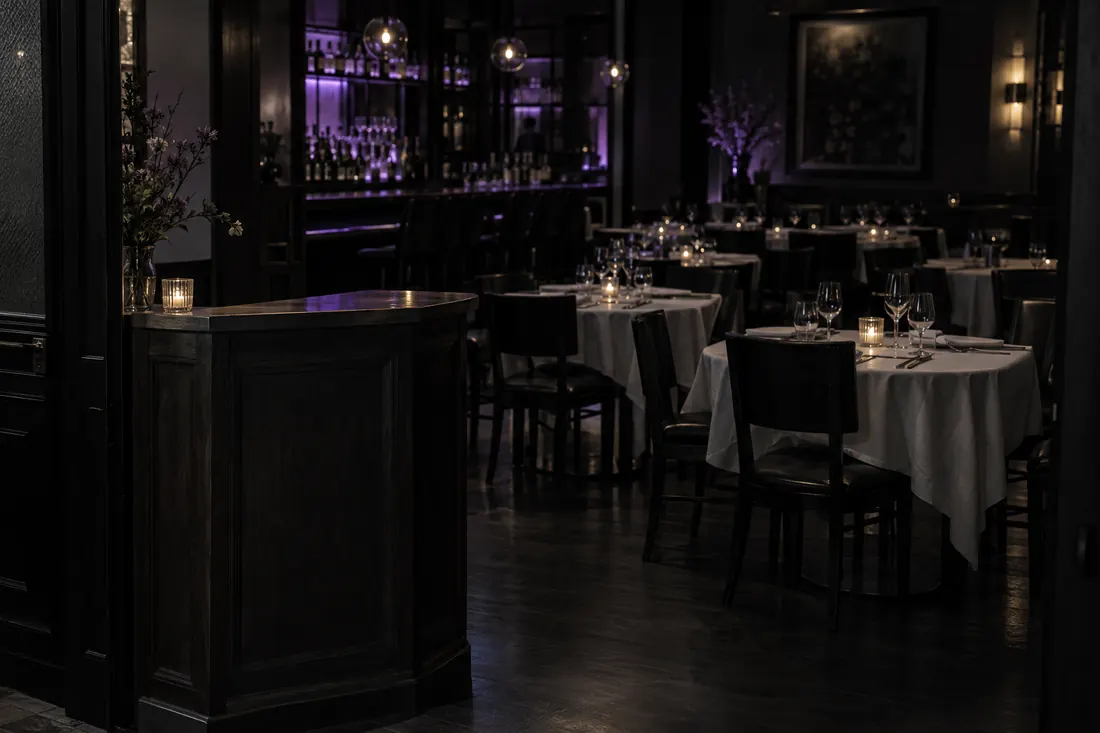
Hospitality and High-Volume Dining
For restaurants, bars and venues where a full book and a fast line decide the night. The guest's path from search to seat to check runs through one system that you own.
Proprietary POS and reservation hosting means the table plan, the menu and the guest list all sit on infrastructure we operate for you, and the kitchen sees what the front door just promised.
What your customers touch
- Reservations and waitlist on your own site, with your table plan and your policies
- Online ordering and POS on one menu, for dine-in and pickup
- Guest records that keep visits, preferences and notes
What your staff run
- Kitchen execution: tickets routed to stations in the order the line can cook them
- Staff scheduling matched to the book
- Inventory counted against what was actually sold
The booking is yours
A third-party booking platform such as OpenTable is one of the bills a restaurant can stop paying. The reservation is taken on your own site, the guest record stays in your system, and no marketplace sits between you and the guest.
Last night, this morning
Covers, average check, food cost and labor against sales, by service and by day. You can see whether a service made money the next morning instead of at month-end.
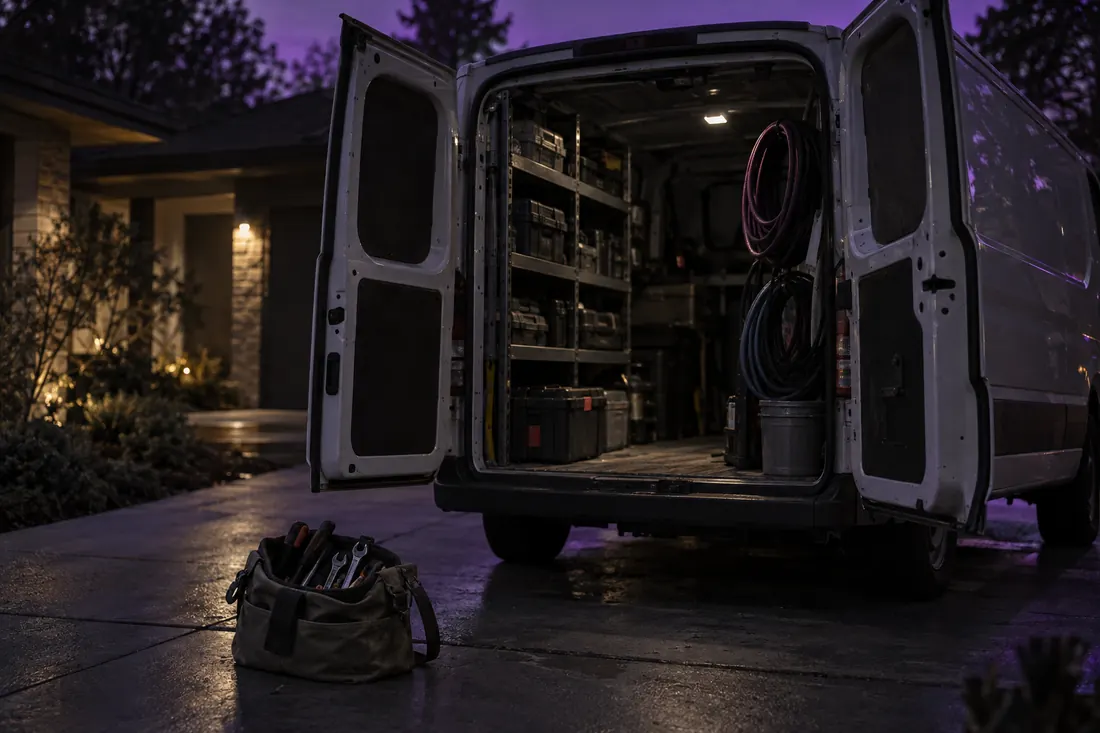
Home Services and Field Dispatch
For plumbing, HVAC, electrical, cleaning, flooring and other trades that send people to a customer's door. The system connects the first call to the dispatched technician to the paid invoice.
Because the lead, the booking and the job are one record, nobody retypes an address, and the office can see where every job stands without calling the truck.
What your customers touch
- Lead capture with the source of every call and form recorded
- Online booking for service calls and estimates, inside the hours and areas you serve
- Customer portal for appointment status, quotes and invoices
What your staff run
- A dispatch board that turns a booking into an assigned, routed job
- Technician scheduling by skill, area and availability
- Parts and van stock drawn down as jobs close
Your leads, your customer list
Lead marketplaces and per-user field service subscriptions drop out. Leads arrive through your own site and search presence, bookings land in your own dispatch engine, and the customer list belongs to you rather than to a marketplace.
Margin per job and per source
Revenue, parts and labor per job and per technician, with booked revenue traced back to the lead source that produced it.
AG Construction is a flooring installation and refinishing company serving Maryland from Frederick to the DC suburbs. Six months into our search program, organic search traffic was up 450%, verified in Google Search Console. The case study covers the search program only. Read the AG Construction case study
Construction and Commercial Trades
For contractors and trades whose margin is won or lost job by job. Estimating, crews, materials and the client's view of the project sit in one system instead of in email threads and spreadsheets.
The client sees progress without phoning the site, and the office sees cost against the estimate while there is still time to act on it.

What your customers touch
- Lead capture and estimate requests, with the source recorded
- Client portal for project status, documents, change orders and invoices
- Booking for site visits and walkthroughs
What your staff run
- Job execution by phase, with tasks and checklists for each crew
- Crew scheduling across concurrent jobs
- Materials and equipment allocated to jobs and tracked against the estimate
The project record stays with you
Lead marketplaces, project-portal subscriptions and separate hosting and security vendors drop out. The client portal and the job records run on infrastructure we own, so the project history stays with your company.
Job costing while the job runs
Estimate against actual for labor and materials, by job and by phase, and margin across every open job.
AG Construction, Maryland
AG Construction is a flooring installation and refinishing company serving Maryland from Frederick to the DC suburbs. We ran a comprehensive SEO program: keyword research grounded in what Maryland homeowners search, on-page optimization across service and city pages, and link building to establish authority.
The case study covers the search program, which is the acquisition layer of this architecture. Read the AG Construction case study or see all our work.
FAQ
Common questions.
My industry is not one of the four. Can you still build for it?
Yes. The four here are examples, not limits. If your business takes bookings, orders or inquiries and schedules people or resources to deliver, the same modules apply. Workflow mapping is where we find out which ones.
Do I need every module marked for my industry?
No. The matrix shows what a typical build includes. Start with the modules that solve your most expensive problem and add the rest when they earn their place.
Does owning the hosting really remove platform fees?
It removes the fees charged by the third-party platforms the system replaces, such as booking marketplaces, POS add-ons and per-seat tools. It does not remove card processing, which still runs through a payment processor and the card networks. The system design lists both.
Do you work outside Indianapolis?
Yes. Indianapolis and central Indiana are our home market, and we also work across the DC, Virginia, and Maryland metro, plus remotely nationwide.
Talk to us
Not sure which one you are?
Most businesses are a mix. Tell us how the work moves through yours and we will sketch which modules fit, before you commit to anything.
Talk through your operationWe reply within one business day. We never share your details.