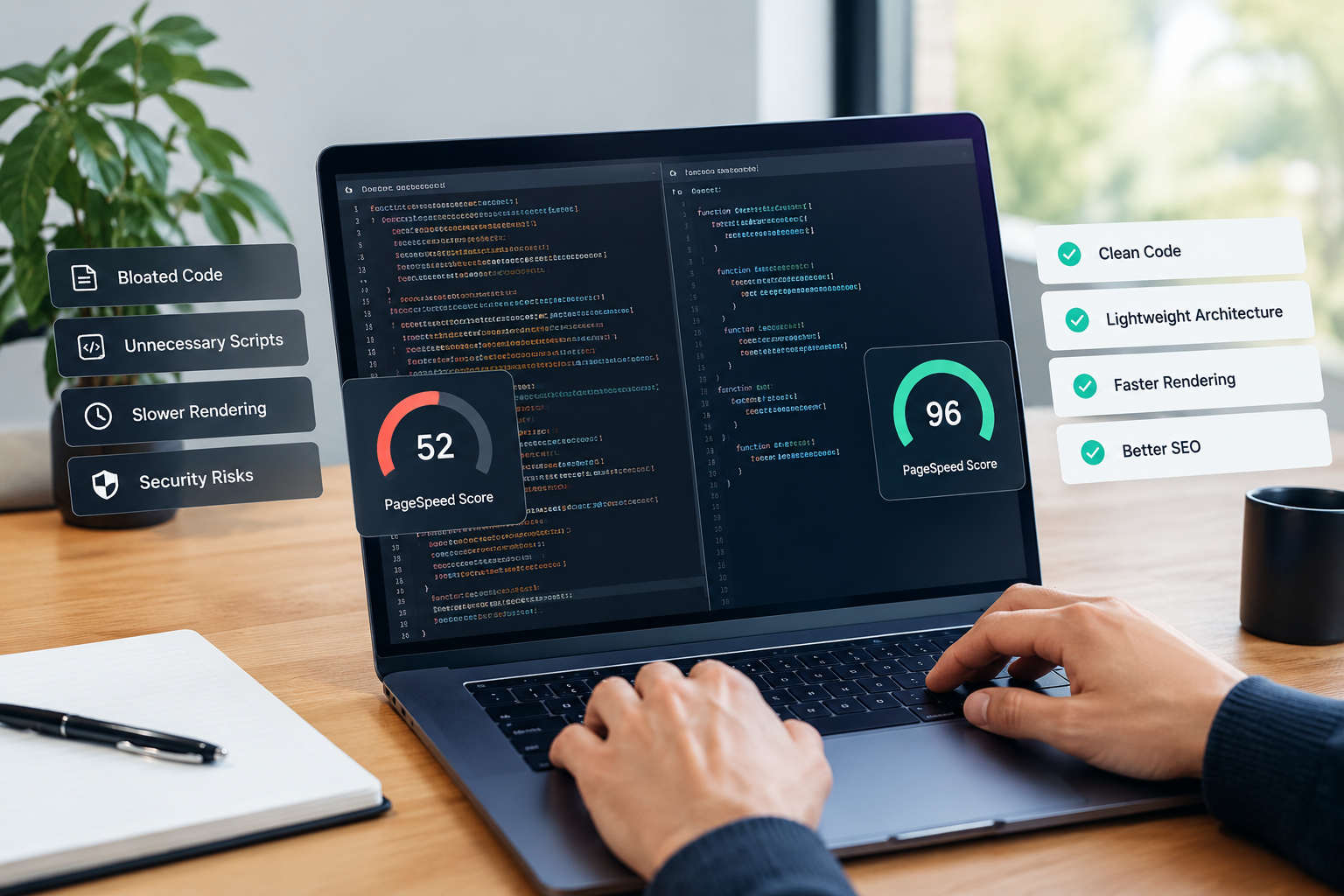
Monolithic CMS platforms often hide technical debt that slows your site and exposes security gaps. When you’re planning an enterprise website redesign strategy, relying on template builds can add unnecessary bloat and drag down custom web development performance. Shifting to lightweight web architecture with clean code page speed optimization clears the path for faster rendering and better headless CMS technical SEO. Let’s explore why custom architecture beats traditional templates every time.
Understanding the Hidden Costs of Template-Based Systems
Template-based content management systems promise quick deployment and ease of use. Yet beneath this convenience lies a foundation of accumulated code that your business never requested and likely will never need. Each pre-built template carries dozens of features designed to serve the broadest possible market. Your organization pays the price in load times, security vulnerabilities, and maintenance overhead.
The architecture of monolithic platforms creates dependencies that compound over time. When you install a template, you inherit not just the visible design elements but also the underlying framework, plugin requirements, and third-party integrations the developer chose. This approach contradicts the principles of clean code page speed optimization, where every line serves a specific purpose aligned with your business goals.
The Real Impact on Performance Metrics
Page speed directly affects your bottom line. Studies consistently show that users abandon sites that take longer than three seconds to load. Search engines factor rendering speed into ranking algorithms. When your site carries excess template code, every visitor downloads resources they never see or interact with. This waste translates to lost revenue and diminished search visibility.
Custom web development performance starts with intentional architecture. By building only what your business requires, developers eliminate the bloat inherent in template systems. The result is faster initial load times, quicker time to interactive metrics, and improved Core Web Vitals scores that search engines reward.
The Security Vulnerabilities Templates Introduce
Pre-built templates represent attractive targets for malicious actors. Because thousands of sites may use identical code bases, a single discovered vulnerability can be exploited at scale. Attackers scan for common template signatures, then deploy automated tools to compromise multiple sites simultaneously.
Your enterprise website redesign strategy must account for these security considerations. Template-based builds often include abandoned plugins, outdated libraries, and unmaintained code fragments. Each represents a potential entry point for unauthorized access. The shared nature of template code means security patches lag behind threat detection, leaving your site exposed during critical windows.
Custom Architecture as a Security Foundation
Building from scratch with lightweight web architecture reduces your attack surface. Custom code contains no unnecessary features that could harbor vulnerabilities. Developers can implement security best practices from the ground up, rather than retrofitting protections onto existing template structures.
This approach allows for precise control over every dependency. Your development team selects only vetted, actively maintained libraries. They can respond immediately to emerging threats without waiting for template vendors to release patches. The security posture of custom builds remains under your direct control, not subject to the priorities of third-party template marketers.
How Monolithic CMS Creates Technical Debt
Technical debt accumulates when short-term convenience sacrifices long-term maintainability. Monolithic content management systems exemplify this tradeoff. The initial setup may seem straightforward, but each update, plugin addition, and customization attempt adds complexity that future developers must navigate.
Template builds compound this debt through abstraction layers that obscure the actual code running your site. When problems arise, troubleshooting requires understanding not just the template itself but also the CMS framework, the theme layer, and the interactions between numerous plugins. This complexity increases development costs and extends resolution times for critical issues.
The Maintenance Burden of Legacy Systems
As your business evolves, your digital presence must adapt. Monolithic systems resist change. Adding new features often requires workarounds that further complicate the codebase. Simple requests can trigger cascading updates across multiple system components, each introducing new points of failure.
Clean code page speed optimization demands a different approach. When developers build custom solutions, they create clear documentation and maintainable structures. Future modifications happen at the code level, not through layers of abstraction. Your team gains agility to respond to market changes without fighting against platform limitations.
The Performance Advantages of Headless Architecture
Headless CMS technical SEO represents a fundamental shift in how content management systems serve websites. By separating content storage from presentation, headless systems enable developers to build front ends optimized purely for performance. There are no template constraints, no theme overhead, no plugin conflicts.
This separation allows for lightweight web architecture where the front end consists of static files or server-rendered pages with minimal JavaScript. Content APIs deliver only the data each page requires, eliminating the database queries and processing overhead of traditional CMS page loads.
Static Site Generation and Edge Delivery
Modern headless architectures support static site generation, where pages are built at deploy time rather than on each request. These pre-rendered pages serve instantly from content delivery networks positioned close to users worldwide. The performance gains are substantial, with load times often measured in hundreds of milliseconds rather than seconds.
Your enterprise website redesign strategy should consider these architectural options. Static generation combined with incremental rebuilds provides the speed of static sites with the flexibility of dynamic content. Edge functions handle personalization and dynamic features without sacrificing the baseline performance of pre-rendered pages.
Building for Custom Web Development Performance
Performance engineering begins at the architecture phase. When developers start with a blank canvas rather than a template, they can make intentional decisions about every aspect of the technical stack. Framework selection, asset delivery, rendering strategy, and caching approaches all align with your specific performance targets.
Custom web development performance requires measuring what matters. Instead of generic speed scores, custom builds optimize for the metrics that affect your users and business goals. E-commerce sites prioritize product page rendering. Content publishers focus on article load times. B2B platforms emphasize form interaction speed.
Eliminating Render-Blocking Resources
Templates typically load CSS and JavaScript files in ways that block initial page rendering. Users see blank screens while browsers download and process resources they may never need. Custom builds implement critical CSS inlining, deferred script loading, and code splitting that delivers only what each page requires.
These techniques directly support clean code page speed optimization. By controlling the exact resources each page loads, developers minimize the critical rendering path. Pages become visible and interactive faster, improving user experience and search engine rankings simultaneously.
The SEO Benefits of Clean Architecture
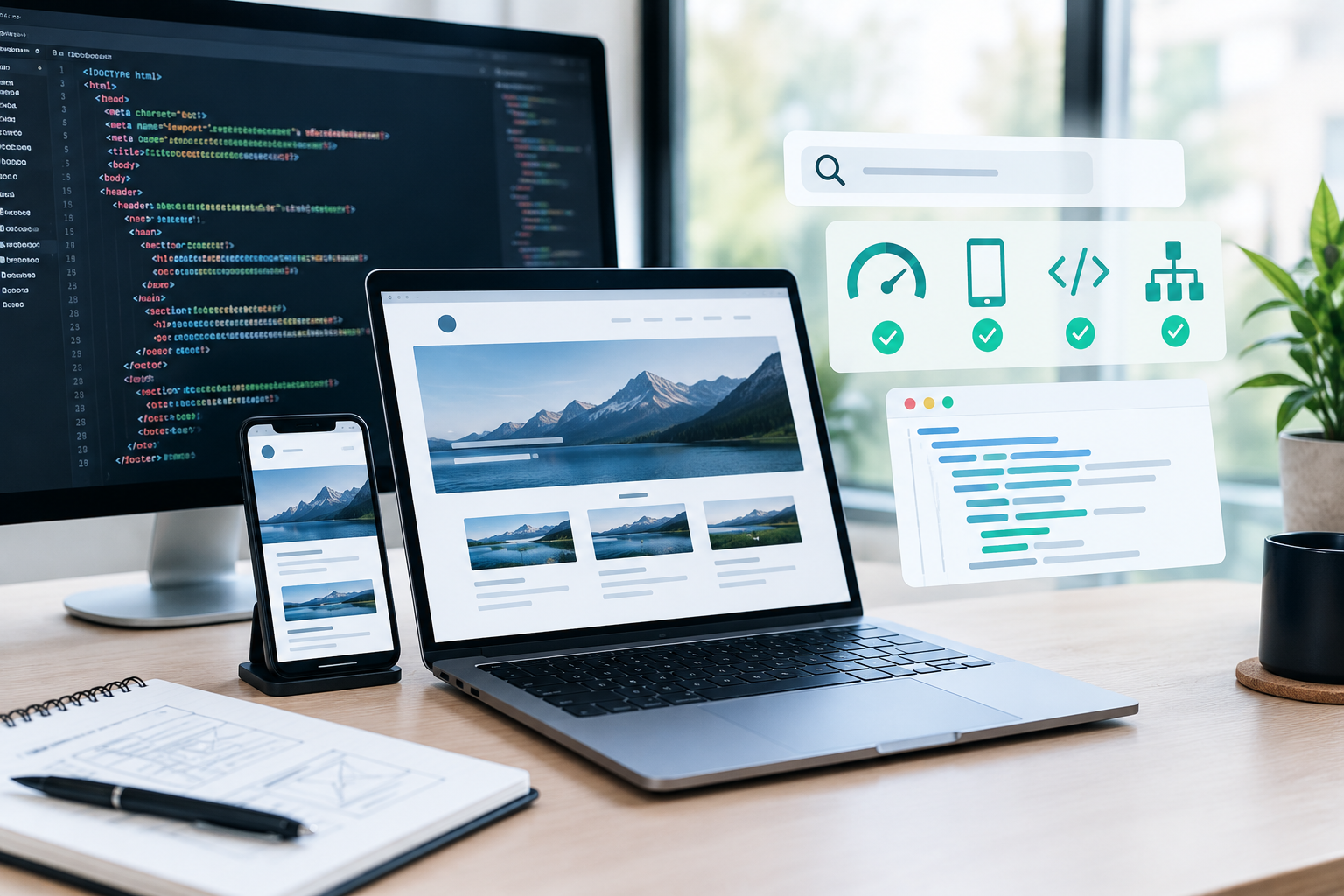
Search engines evaluate websites on hundreds of factors, many tied directly to technical implementation. Headless CMS technical SEO excels because clean architecture naturally satisfies search engine requirements. Fast load times, mobile responsiveness, semantic HTML, and crawlable content structures all emerge from well-designed custom builds.
Template systems often generate bloated HTML with excessive div nesting, inline styles, and non-semantic markup. These patterns make it harder for search engines to understand page content and structure. Custom development produces clean, semantic HTML that clearly communicates content hierarchy and meaning.
Core Web Vitals and Ranking Factors
Google’s Core Web Vitals measure real user experience through metrics like Largest Contentful Paint, First Input Delay, and Cumulative Layout Shift. Template-based sites struggle with these metrics due to render-blocking resources, large JavaScript bundles, and layout instability from dynamically loaded content.
Lightweight web architecture addresses these challenges through server-side rendering, optimized asset delivery, and stable layouts defined at build time. Custom builds can achieve excellent Core Web Vitals scores because every performance aspect is under developer control. This technical foundation supports better search rankings and increased organic traffic.
Planning Your Enterprise Website Redesign Strategy
Successful redesigns begin with honest assessment of current technical debt. Audit your existing site for unused features, outdated dependencies, and performance bottlenecks. Identify which template elements serve real business needs versus those included by default. This analysis reveals opportunities for simplification through custom development.
Your enterprise website redesign strategy should prioritize long-term maintainability over short-term convenience. While custom builds require larger upfront investment, they eliminate ongoing costs associated with template limitations. Development teams work more efficiently when code is purpose-built rather than adapted from generic templates.
Assembling the Right Development Team
Custom architecture requires developers skilled in modern web technologies and performance engineering. Look for teams experienced with headless CMS implementations, static site generation, and progressive enhancement techniques. The right partners will advocate for clean code page speed optimization throughout the development process.
Evaluate potential partners based on their approach to technical decisions. Strong development teams explain tradeoffs clearly and recommend solutions aligned with your business goals. They provide performance budgets, establish monitoring systems, and commit to measurable speed targets.
Measuring Success Beyond Launch
Performance monitoring should continue long after site launch. Implement real user monitoring to track actual visitor experiences across different devices, locations, and network conditions. Synthetic monitoring catches regressions before they affect users. These systems provide early warning when new content or features impact load times.
Custom web development performance improves through continuous measurement and refinement. Establish baseline metrics during development, then track changes over time. Regular performance audits identify new opportunities for speed improvements as browsers evolve and new techniques emerge.
The Competitive Advantage of Speed
Fast sites convert better, rank higher, and cost less to operate. Users spend more time on pages that load quickly and respond immediately to interactions. Search engines reward sites that provide excellent user experiences. Infrastructure costs decrease when efficient code requires fewer server resources.
These advantages compound over time. While competitors struggle with template limitations and accumulated technical debt, your custom-built site remains fast and maintainable. Your development team can implement new features quickly without fighting platform constraints. This agility becomes a lasting competitive advantage in fast-moving markets.
Making the Transition from Templates to Custom Code
Migrating from template-based systems to custom architecture requires careful planning. Begin by documenting current functionality and identifying core features that serve business objectives. Not every existing feature deserves recreation in the new system. This transition offers an opportunity to eliminate unused capabilities and simplify user experiences.
Headless CMS technical SEO considerations should guide migration planning. Preserve URL structures where possible to maintain search equity. Implement proper redirects for changed URLs. Ensure new pages include all necessary metadata and structured data. Plan the migration in phases to minimize disruption and allow for testing.
Phased Implementation Strategies
Large sites benefit from phased migrations that transition sections gradually. Start with new content types or less critical site areas. This approach allows teams to refine processes before migrating high-traffic pages. It also demonstrates performance improvements early, building stakeholder confidence in the new architecture.
Each phase should include thorough testing of functionality, performance, and search visibility. Monitor analytics closely to catch any unexpected issues. Compare new page performance against old baselines to quantify improvements. Document lessons learned to inform subsequent migration phases.
The Long-Term Value of Clean Code
Code quality affects every aspect of digital operations. Clean, well-documented code reduces onboarding time for new developers. It makes troubleshooting faster when issues arise. It enables confident refactoring as requirements evolve. These benefits accumulate over years of site operation.
Lightweight web architecture built on clean code principles scales efficiently as your business grows. Adding new features doesn’t require fighting existing technical debt. Performance remains strong because the foundation was built for speed. Security stays strong because the attack surface remains minimal.
Your investment in custom development pays dividends through reduced maintenance costs, faster feature delivery, and superior user experiences. While template-based competitors struggle with platform limitations, your team maintains full control over technical direction. This control translates directly to business agility and market responsiveness.
Taking Action on Your Redesign
The decision to pursue custom architecture over template builds requires commitment from technical and business leadership. It means prioritizing long-term value over short-term convenience. It requires trusting skilled developers to build solutions tailored to your specific needs.
Begin by assembling stakeholders to review current site performance and identify improvement opportunities. Establish clear goals for your enterprise website redesign strategy, including specific performance targets and business outcomes. Research development partners with proven expertise in headless CMS technical SEO and custom web development performance.
Request detailed proposals that outline technical approaches, timelines, and success metrics. Strong proposals will address clean code page speed optimization, security considerations, and long-term maintenance plans. They will demonstrate understanding of your business goals and explain how lightweight web architecture serves those objectives.
The path from template-based systems to custom architecture requires effort and investment. The rewards include faster sites, better security, lower technical debt, and greater business agility. For organizations serious about digital excellence, custom development represents not just a technical choice but a strategic advantage that compounds over time.
Frequently Asked Questions
What makes clean code faster than template-based code?
Clean code eliminates unnecessary features, libraries, and dependencies that templates include by default. Every line serves a specific purpose rather than supporting hypothetical use cases. This focused approach reduces file sizes, minimizes processing overhead, and shortens the critical rendering path, resulting in faster load times and better user experiences.
How does a headless CMS improve technical SEO compared to traditional platforms?
Headless CMS platforms separate content from presentation, allowing developers to build front ends optimized purely for performance and search visibility. They support static site generation, clean semantic HTML, and fast rendering times that satisfy Core Web Vitals requirements. This architecture naturally produces the technical foundations search engines reward with higher rankings.
Is custom web development more expensive than using templates?
Custom development requires larger upfront investment but eliminates ongoing costs associated with template limitations, plugin licenses, and workarounds for platform constraints. Over three to five years, custom builds often cost less due to reduced maintenance overhead, faster feature development, and eliminated technical debt. The performance and security advantages provide additional value that templates cannot match.
How long does it take to migrate from a monolithic CMS to custom architecture?
Migration timelines vary based on site size, content volume, and feature complexity. Small to medium sites often complete migration in three to six months. Large enterprise sites benefit from phased approaches spanning six to twelve months. Proper planning, clear documentation, and experienced development teams keep projects on schedule while maintaining quality and minimizing disruption.
Can lightweight web architecture support complex enterprise features?
Modern lightweight architecture supports sophisticated functionality through API integrations, serverless functions, and progressive enhancement techniques. Features like personalization, e-commerce, user authentication, and dynamic content all work within clean, performance-focused architectures. The key is building only what your business requires rather than starting with bloated frameworks designed for every possible use case.
How Elevated Marketing can help
We do this work every day for businesses in Indianapolis, the DC & Virginia metro, and nationwide.
→ Website Security & Monitoring→ SEO & GEO Services→ Managed Web Hosting→ More on UncategorizedGet a free audit