

DDoS attack website threat protection is no longer just an IT concern, it’s a business survival issue. You’ve probably seen how sudden traffic spikes can bring your site to a halt, costing time and trust. This guide breaks down how building a strong enterprise website security architecture keeps your site online and your data safe, even under the heaviest attacks.
Understanding the Real Cost of DDoS Attacks for Mid-Market Organizations
The financial impact of a successful DDoS attack extends far beyond immediate downtime. When your website becomes unavailable, you lose revenue from every transaction that fails to complete. Your customer support teams face overwhelming call volumes. Your brand reputation takes a hit that can persist long after systems return to normal operation.
For mid-market companies handling sensitive customer data, the stakes climb even higher. Regulatory compliance requirements mean that security incidents trigger mandatory reporting obligations. Your security compliance officers must document every breach, notify affected parties, and potentially face penalties. Operations managers watch productivity plummet as employees cannot access critical systems.
The average cost of a DDoS attack for mid-sized businesses now exceeds $120,000 per incident when accounting for lost revenue, recovery expenses, and reputational damage. These figures make investing in proper cyber threat defense for business sites not just prudent but essential for survival.
Core Components of Enterprise Website Security Architecture
Building effective DDoS attack website threat protection requires multiple layers working together. A comprehensive enterprise website security architecture incorporates several critical elements that provide defense in depth.
Traffic Analysis and Pattern Recognition
Your first line of defense starts with understanding normal traffic patterns. Baseline metrics reveal what typical user behavior looks like for your specific business. When traffic suddenly deviates from these patterns, your systems need to recognize the anomaly immediately.
Advanced traffic analysis tools monitor incoming requests in real time, examining factors like geographic origin, request frequency, and user agent strings. This continuous monitoring enables your security systems to distinguish between legitimate traffic spikes (such as during a product launch) and malicious attack patterns.
Distributed Network Infrastructure
Centralized hosting creates a single point of failure that attackers can exploit. Modern enterprise website security architecture distributes your web presence across multiple servers and geographic locations. This distribution makes it exponentially harder for attackers to overwhelm your entire system simultaneously.
Content delivery networks (CDNs) play a crucial role in this distributed approach. By caching your content across numerous edge servers worldwide, CDNs absorb traffic spikes while maintaining fast response times for legitimate users. This infrastructure naturally provides high volume traffic attack protection as part of its core functionality.
Rate Limiting and Request Filtering
Not all traffic deserves equal treatment. Rate limiting controls how many requests any single source can make within a specific timeframe. When a source exceeds these limits, your systems can automatically throttle or block additional requests.
Request filtering examines the content and structure of incoming traffic. Malformed requests, suspicious payloads, and known attack signatures get blocked before they reach your origin servers. This filtering happens at the edge of your network, preserving resources for legitimate users.
Redundant DNS Infrastructure
Domain Name System (DNS) servers translate your domain name into the IP addresses users need to reach your site. Attackers often target DNS infrastructure because bringing down your DNS effectively makes your website unreachable even if your servers remain operational.
Redundant DNS infrastructure distributes your DNS records across multiple providers and geographic regions. This redundancy ensures that even if attackers compromise one DNS server, others continue resolving requests and keeping your site accessible.
Strategies for Mitigating DDoS Attacks Without Downtime
The goal of effective DDoS defense is not merely surviving attacks but maintaining service continuity throughout them. Mitigating DDoS attacks without downtime requires proactive planning and rapid response capabilities.
Automated Response Protocols
Manual intervention cannot match the speed of modern DDoS attacks. Automated response protocols detect attack patterns and implement countermeasures within seconds. These protocols might include redirecting traffic through scrubbing centers, activating additional server capacity, or implementing stricter filtering rules.
Your automated systems should escalate to human oversight when needed, but they must handle the initial response independently. Every second of delay allows attackers to consume more resources and potentially break through your defenses.
Capacity Planning and Elastic Scaling
Your infrastructure must accommodate both normal peak loads and attack traffic. Capacity planning identifies your maximum expected legitimate traffic and builds in substantial overhead. This overhead provides breathing room when attacks begin.
Cloud-based infrastructure enables elastic scaling that automatically provisions additional resources during traffic spikes. This elasticity means your systems can absorb attack traffic without degrading service for legitimate users. The cost of maintaining excess capacity becomes negligible compared to the losses from successful attacks.
Traffic Scrubbing Services
Specialized traffic scrubbing services filter malicious requests before they reach your infrastructure. When an attack begins, you redirect incoming traffic through these scrubbing centers. The scrubbing service analyzes each request, blocks malicious traffic, and forwards legitimate requests to your origin servers.
This approach provides high volume traffic attack protection by handling the computational burden of filtering massive traffic volumes. Your own infrastructure never sees the attack traffic, maintaining normal performance levels throughout the incident.
Geographic and Behavioral Blocking
Analyzing your legitimate user base reveals patterns you can leverage for defense. If your customers primarily come from specific geographic regions, you can implement stricter scrutiny or outright blocking for traffic from unexpected locations during attacks.
Behavioral analysis identifies requests that deviate from typical user patterns. Legitimate users follow predictable sequences: they load pages, click links, and submit forms in ways that reflect human interaction. Bots and attack scripts exhibit different behaviors that your systems can recognize and block.
Implementing 24/7 Web Security Monitoring Solutions
Attacks do not respect business hours. Effective cyber threat defense for business sites requires constant vigilance through 24/7 web security monitoring solutions that never sleep.
Security Operations Center (SOC) Integration
A dedicated Security Operations Center provides round-the-clock monitoring by trained specialists. Your SOC team watches for attack indicators, analyzes security events, and coordinates response efforts. This human expertise complements automated systems by providing context and making judgment calls that algorithms cannot.
For mid-market companies, building an internal SOC often proves cost-prohibitive. Managed security service providers offer SOC capabilities as a service, giving you access to expert monitoring without the overhead of maintaining a full-time security team.
Real-Time Alert Systems
Your monitoring solutions must notify the right people immediately when threats emerge. Real-time alert systems use multiple communication channels to ensure critical notifications reach decision-makers regardless of time or location.
Alert fatigue represents a genuine concern. Too many false positives train your team to ignore notifications. Properly tuned alert systems balance sensitivity with specificity, flagging genuine threats while minimizing noise.
Comprehensive Logging and Forensics
Detailed logs provide the raw data needed to understand attacks and improve defenses. Your enterprise website security architecture should capture and retain logs covering all traffic, security events, and system activities.
These logs serve multiple purposes beyond immediate security response. Compliance requirements often mandate specific retention periods for security logs. Forensic analysis after attacks reveals how attackers breached defenses and what improvements can prevent similar incidents.
Performance and Availability Metrics
Security monitoring extends beyond threat detection to encompass overall system health. Performance metrics reveal when systems approach capacity limits or experience degradation. Availability monitoring confirms that all components remain operational and accessible.
These metrics provide early warning of potential issues before they become full outages. They also help you distinguish between attack-related problems and routine technical issues that require different responses.
Balancing Security and User Experience
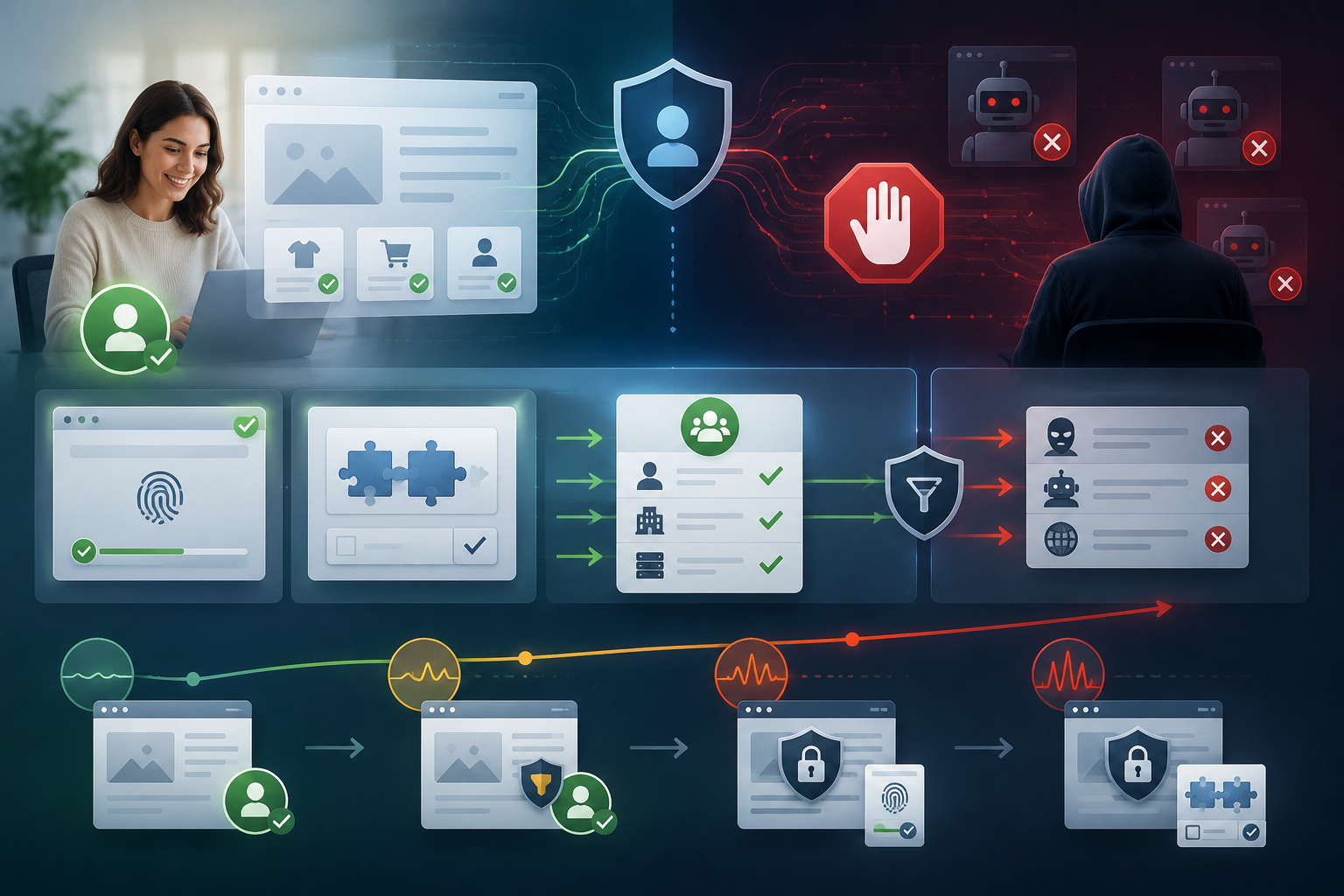
The most secure system is useless if legitimate users cannot access it. Effective DDoS attack website threat protection must maintain usability while blocking threats.
Challenge-Response Mechanisms
CAPTCHA challenges and similar verification methods distinguish human users from automated bots. These challenges introduce friction into the user experience, so they should activate only when attack indicators appear rather than running constantly.
Modern challenge systems use invisible verification methods that analyze user behavior without requiring explicit interaction. These approaches maintain security while minimizing impact on user experience.
Whitelisting Trusted Sources
Regular customers, business partners, and known-good IP addresses should bypass strict filtering. Whitelisting these trusted sources ensures they maintain access even during attacks when you implement aggressive blocking rules.
Your whitelist requires regular maintenance to remain effective. Removing outdated entries prevents attackers from exploiting previously trusted sources that have been compromised.
Progressive Enforcement
Security measures should scale with threat levels. Under normal conditions, you apply minimal restrictions that prioritize user experience. As attack indicators increase, you progressively implement stricter controls.
This progressive approach balances security and usability by applying the minimum restrictions necessary at any given moment. Users experience minimal friction during normal operations while remaining protected during active attacks.
Compliance Considerations for Security Architecture
Security compliance officers at expanding firms face complex regulatory requirements that intersect with DDoS defense strategies. Your enterprise website security architecture must satisfy these obligations while providing effective protection.
Documentation and Audit Trails
Regulatory frameworks require documented security policies and procedures. Your architecture documentation should detail how each component contributes to overall security, what threats it addresses, and how it operates.
Audit trails prove that you follow documented procedures. Comprehensive logging creates these trails automatically, capturing evidence of security measures in action. Regular audits verify that actual practices align with documented policies.
Data Protection During Attacks
DDoS attacks sometimes serve as smokescreens for data theft attempts. While your team focuses on restoring availability, attackers exploit the chaos to access sensitive information. Your security architecture must maintain data protection even during service disruptions.
Encryption protects data both in transit and at rest. Access controls limit who can reach sensitive information. These protections operate independently of DDoS defenses, ensuring data security regardless of attack status.
Incident Response Requirements
Many regulations mandate specific incident response procedures and timelines. Your response protocols must satisfy these requirements while effectively countering attacks. Security compliance officers should review response plans to confirm regulatory alignment.
Post-incident reporting often requires detailed information about attack characteristics, response actions, and impact assessment. Your monitoring and logging systems should capture this information automatically to streamline compliance reporting.
Building Your DDoS Defense Roadmap
Implementing comprehensive cyber threat defense for business sites requires careful planning and phased execution. A structured roadmap helps you prioritize investments and measure progress.
Assessment and Gap Analysis
Begin by evaluating your current security posture. Identify existing protections, measure their effectiveness, and document gaps between current capabilities and desired state. This assessment reveals which areas need immediate attention and which can follow in later phases.
Penetration testing and vulnerability assessments provide objective data about your security weaknesses. External experts bring fresh perspectives and specialized knowledge that internal teams might miss.
Prioritizing Investments
Budget constraints force difficult decisions about where to invest first. Prioritize protections that address your most critical vulnerabilities and highest-value assets. Quick wins that provide immediate risk reduction should precede longer-term architectural changes.
Consider both likelihood and impact when prioritizing threats. High-probability, high-impact scenarios deserve immediate attention. Lower-priority risks can wait for future phases.
Vendor Selection and Integration
No single vendor provides all necessary security components. Your enterprise website security architecture will incorporate solutions from multiple providers. Selecting compatible technologies that integrate smoothly saves time and reduces complexity.
Evaluate vendors based on technical capabilities, track record, support quality, and long-term viability. The cheapest option often proves more expensive when accounting for integration challenges and operational overhead.
Testing and Validation
Never assume security measures work as intended without testing them. Controlled attack simulations verify that your defenses activate properly and provide expected protection. These tests reveal configuration errors and gaps in coverage before real attacks exploit them.
Regular testing should become part of your ongoing operations, not just a one-time validation. As your infrastructure evolves and new threats emerge, continuous testing ensures your defenses remain effective.
Maintaining and Evolving Your Security Posture
Implementing DDoS attack website threat protection is not a one-time project but an ongoing commitment. Threats evolve, your business grows, and technology advances. Your security architecture must adapt accordingly.
Continuous Monitoring and Tuning
Security systems require regular tuning to maintain effectiveness. Attack patterns change, requiring updates to detection rules and filtering criteria. Your legitimate traffic patterns shift as your business grows and customer behavior evolves.
Dedicate resources to ongoing monitoring and tuning. This investment prevents your security measures from becoming outdated and ineffective. Regular reviews identify optimization opportunities that improve both security and performance.
Threat Intelligence Integration
Global threat intelligence services track emerging attack techniques and threat actor activities. Integrating this intelligence into your defenses provides early warning of new threats before they target your organization specifically.
Threat intelligence feeds should automatically update your security systems with new attack signatures and indicators of compromise. This automation ensures you benefit from collective security knowledge without manual intervention.
Training and Awareness
Your security architecture is only as strong as the people operating it. Regular training keeps your operations managers and technical staff current on emerging threats and defense techniques. Security awareness programs help all employees recognize and report suspicious activities.
Tabletop exercises and simulated incidents provide valuable practice for your response team. These exercises reveal coordination issues and knowledge gaps in a controlled environment where mistakes carry no real consequences.
The Business Case for Comprehensive DDoS Protection
Investment in mitigating DDoS attacks without downtime delivers measurable business value that extends beyond avoiding losses from successful attacks.
Customer Trust and Brand Protection
Your website serves as the primary interface between your business and customers. Reliable availability builds trust and confidence in your brand. Customers who can always access your services develop loyalty that translates into long-term value.
Competitors will exploit your downtime, capturing customers who cannot reach your site. Once lost, these customers prove difficult and expensive to win back. Preventing this customer churn justifies substantial security investments.
Operational Efficiency
Responding to attacks consumes significant time and resources. Your technical teams drop planned work to fight fires. Operations managers coordinate emergency responses instead of focusing on strategic initiatives. These disruptions ripple throughout your organization.
Effective automated defenses handle most attacks without human intervention, freeing your teams to focus on productive work. The operational efficiency gains from reducing emergency responses compound over time.
Competitive Advantage
Companies with superior high volume traffic attack protection can operate confidently in competitive markets. You can run aggressive marketing campaigns without fearing that success will overwhelm your infrastructure. You can weather attacks that cripple less-prepared competitors.
This resilience becomes a competitive differentiator that influences customer decisions. Enterprise customers specifically evaluate vendor security capabilities when making purchasing decisions. Demonstrating strong defenses opens doors to high-value opportunities.
Moving Forward with Confidence
Building effective enterprise website security architecture protects your business from evolving threats while supporting growth and success. The strategies outlined here provide a foundation for defending against DDoS attacks without sacrificing availability or user experience.
Your specific implementation will reflect your unique business requirements, risk profile, and resource constraints. Start with a thorough assessment of current capabilities and clear prioritization of improvements. Engage experienced partners who can provide expertise and solutions that complement your internal capabilities.
The investment in comprehensive 24/7 web security monitoring solutions and multi-layered defenses pays dividends through avoided losses, maintained customer trust, and operational stability. As your organization expands and handles increasing volumes of sensitive customer data, these protections become not optional enhancements but fundamental requirements for business continuity.
Security compliance officers and operations managers at expanding firms face mounting pressure to demonstrate effective risk management. A well-designed security architecture provides the technical capabilities and documented controls needed to satisfy regulatory requirements while actually protecting your organization from real threats.
The threat environment will continue evolving, but the fundamental principles of defense in depth, continuous monitoring, and rapid response remain constant. Organizations that commit to these principles and invest appropriately in their security infrastructure position themselves for long-term success in an increasingly hostile digital environment.
Your website represents your business in the digital world. Protecting it from DDoS attacks and other cyber threats protects your revenue, reputation, and future growth. The time to build these defenses is now, before the next attack tests your resilience.
Frequently Asked Questions
What is the first step in building DDoS protection for a mid-market company?
Start with a comprehensive assessment of your current security posture and traffic patterns. Document your baseline normal traffic, identify your most critical assets, and evaluate existing protections. This assessment reveals specific gaps and vulnerabilities that your DDoS defense strategy must address, allowing you to prioritize investments based on actual risk rather than assumptions.
How much does enterprise-grade DDoS protection typically cost?
Costs vary widely based on traffic volume, required protection level, and chosen solutions. Basic cloud-based DDoS protection starts around $200 to $500 monthly for small to mid-sized sites, while comprehensive enterprise solutions with dedicated scrubbing capacity and 24/7 monitoring can range from $2,000 to $10,000 or more per month. Compare these costs against the average $120,000 loss per successful attack to understand the return on investment.
Can small security teams effectively manage DDoS defenses?
Yes, through a combination of automated systems and managed security services. Modern DDoS protection platforms handle most attacks automatically without human intervention. Partnering with managed security service providers gives small teams access to expert monitoring and response capabilities without maintaining a full in-house Security Operations Center. Focus your internal resources on strategic oversight and vendor management rather than day-to-day monitoring.
How quickly can DDoS protection be deployed?
Basic cloud-based DDoS protection can be activated within hours by routing traffic through a content delivery network or DDoS mitigation service. Comprehensive enterprise security architecture with custom configurations, redundant infrastructure, and integrated monitoring typically requires 4 to 12 weeks for full implementation. Phased deployment allows you to implement quick-win protections immediately while building more sophisticated capabilities over time.
What metrics should we track to measure DDoS defense effectiveness?
Monitor four key metric categories: availability (uptime percentage, time to detect attacks, time to mitigate), performance (page load times during attacks, legitimate user impact), security (blocked attack volume, false positive rate), and business impact (revenue protected, customer complaints during incidents). Track these metrics over time to identify trends and demonstrate the value of your security investments to stakeholders.
How Elevated Marketing can help
We do this work every day for businesses in Indianapolis, the DC & Virginia metro, and nationwide.
→ Website Security & Monitoring→ SEO & GEO Services→ Managed Web Hosting→ More on CybersecurityGet a free audit