
Your website crashes every time you add another video. That’s not just frustrating, it’s costly. Without the right media-heavy website infrastructure, your growth stalls before it even starts. This post breaks down why tailored IT for content creators is the missing piece in your scalable web development strategy and how smart B2B media hosting solutions can keep your video SEO hosting smooth.
The Growing Demand for Video Content in B2B Marketing
Video content has become the cornerstone of modern digital marketing strategies. Research shows that businesses incorporating video into their marketing see 66% more qualified leads per year. For content marketers and media directors, this presents both an opportunity and a challenge. The opportunity lies in engaging audiences through rich, visual storytelling. The challenge emerges when existing infrastructure cannot support the technical demands of media-rich content delivery.
Your audience expects fast load times, high-quality playback, and seamless viewing experiences across all devices. When your website infrastructure fails to deliver, you lose more than just viewers. You lose credibility, search rankings, and revenue opportunities. This is where specialized IT for content creators becomes not just beneficial but essential for sustained growth.
Understanding Media-Heavy Website Infrastructure
Media-heavy website infrastructure refers to the technical foundation required to host, deliver, and manage large volumes of video and multimedia content. Unlike standard web hosting, this specialized infrastructure must handle significantly larger file sizes, higher bandwidth requirements, and more complex delivery mechanisms.
Core Components of Robust Media Infrastructure
A properly designed media-heavy website infrastructure includes several critical elements. Content delivery networks (CDNs) distribute your video files across multiple servers worldwide, reducing latency and improving load times for global audiences. Database optimization ensures that metadata, user interactions, and analytics data process efficiently without slowing down content delivery.
Storage solutions must accommodate rapid growth while maintaining accessibility and redundancy. Your infrastructure needs to scale automatically during traffic spikes, preventing crashes when your content goes viral or when you launch major campaigns. Load balancing distributes incoming requests across multiple servers, preventing any single point of failure from bringing down your entire operation.
Why Standard Hosting Falls Short
Traditional shared hosting environments were designed for text-based websites with occasional images. These platforms typically impose strict bandwidth limits, storage caps, and processing restrictions that make them unsuitable for video content. When you attempt to host videos on standard infrastructure, you encounter slow page loads, buffering issues, and frequent downtime.
Shared hosting also lacks the caching mechanisms necessary for efficient video delivery. Every time a user requests a video, the server must process that request from scratch, consuming resources and slowing response times. For content creators publishing multiple videos weekly or daily, this approach quickly becomes unsustainable.
The Business Case for Scalable Web Development
Scalable web development means building systems that grow with your content needs without requiring complete overhauls. This approach saves money, reduces technical debt, and ensures consistent performance as your audience expands.
Cost Implications of Poor Infrastructure
When your infrastructure cannot support your content strategy, costs accumulate in multiple ways. Direct costs include emergency server upgrades, bandwidth overage fees, and rushed migrations to new hosting providers. Indirect costs prove even more damaging: lost ad revenue during downtime, decreased organic traffic from poor site performance, and damaged brand reputation.
Consider a media company publishing three videos weekly. With inadequate infrastructure, each video upload might cause temporary site slowdowns. Over a year, this translates to hundreds of hours of degraded performance, potentially affecting thousands of visitors. The cumulative effect on search engine rankings and user retention can set your growth back by months or years.
Planning for Growth from Day One
Scalable web development starts with anticipating future needs during initial planning phases. Rather than building for current requirements alone, you design systems capable of handling 10x or 100x your current traffic and content volume. This forward-thinking approach prevents the need for disruptive migrations and rebuilds as you grow.
Architecture decisions made early determine your long-term flexibility. Choosing modular systems, API-first designs, and cloud-native technologies creates pathways for expansion without fundamental restructuring. Your IT for content creators should include regular capacity planning reviews, performance benchmarking, and proactive infrastructure adjustments.
Video SEO Hosting: Technical Requirements for Visibility
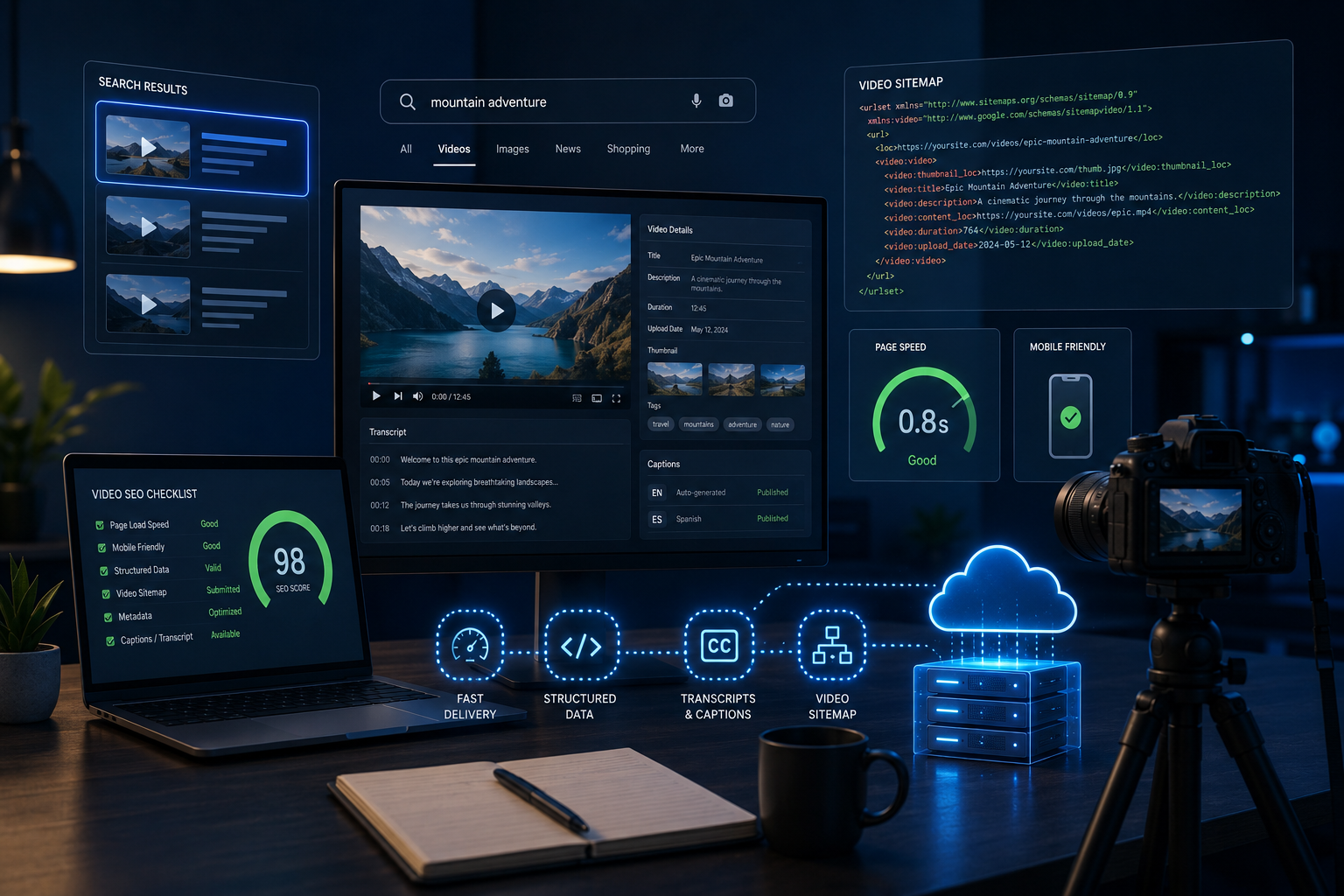
Video SEO hosting combines the technical infrastructure needed for video delivery with optimization features that improve search engine visibility. This specialized hosting environment ensures that search engines can properly index, understand, and rank your video content.
Technical Factors Affecting Video Search Rankings
Search engines evaluate numerous technical factors when ranking video content. Page load speed directly impacts rankings, with slower pages receiving lower positions in search results. Your video SEO hosting must deliver fast initial page loads and quick video start times to satisfy both users and search algorithms.
Structured data markup helps search engines understand your video content. Schema.org video object markup provides information about duration, upload date, description, and thumbnail images. Proper implementation of this markup increases the likelihood of your videos appearing in rich search results and video carousels.
Mobile responsiveness has become a critical ranking factor. Your hosting infrastructure must serve appropriately sized video files based on device capabilities and connection speeds. Adaptive bitrate streaming adjusts video quality in real time, ensuring smooth playback regardless of network conditions.
Metadata Management and Delivery
Effective video SEO hosting includes tools for managing video metadata at scale. Title tags, descriptions, transcripts, and captions all contribute to search visibility. Your infrastructure should make it easy to add, edit, and update this information across your entire video library.
Transcripts serve dual purposes: improving accessibility for hearing-impaired users and providing search engines with indexable text content. Your hosting solution should support automatic transcript generation and easy editing workflows. Captions improve user engagement and watch time, both of which send positive signals to search algorithms.
Video sitemaps inform search engines about all video content on your site. Your infrastructure should automatically generate and update these sitemaps as you publish new content. This automation ensures that search engines discover your videos quickly, improving time-to-index and accelerating organic traffic growth.
B2B Media Hosting Solutions: Enterprise-Grade Requirements
B2B media hosting solutions address the specific needs of businesses creating content for professional audiences. These solutions prioritize reliability, security, and integration capabilities over consumer-focused features like social sharing widgets.
Security Considerations for Business Content
Business video content often includes proprietary information, product demonstrations, client testimonials, and training materials. Your hosting infrastructure must protect this content from unauthorized access while allowing controlled sharing with intended audiences. Access controls, authentication systems, and encryption protect sensitive material throughout the content lifecycle.
DRM (Digital Rights Management) systems prevent unauthorized downloading and redistribution of your videos. For B2B companies concerned about competitors accessing strategic content, these protections prove essential. Your IT for content creators should include consultation on appropriate security levels based on content sensitivity and business requirements.
Compliance requirements vary by industry and geography. Healthcare companies must ensure HIPAA compliance, financial services firms need SOC 2 certification, and European audiences require GDPR-compliant data handling. Your B2B media hosting solutions must meet all relevant regulatory standards for your industry and target markets.
Integration with Marketing Technology Stacks
Modern B2B marketing relies on interconnected systems for CRM, marketing automation, analytics, and content management. Your media hosting infrastructure must integrate smoothly with these existing tools. API connections enable automated workflows, such as adding video viewers to nurture campaigns or triggering sales alerts when key prospects watch product demos.
Analytics integration provides deep insights into viewer behavior. Understanding which videos drive conversions, where viewers drop off, and how video consumption correlates with sales outcomes informs content strategy and budget allocation. Your scalable web development approach should include custom analytics implementations tailored to your specific business metrics.
Lead generation capabilities turn video viewers into qualified prospects. Gated content, in-video forms, and call-to-action overlays capture viewer information while they engage with your content. These features require careful implementation to avoid disrupting the viewing experience while still achieving marketing objectives.
Building Your Media Infrastructure: A Strategic Framework
Creating effective media-heavy website infrastructure requires systematic planning and execution. This framework guides businesses through the decision-making process, ensuring that technical choices align with business objectives.
Assessing Current Infrastructure Capabilities
Begin by auditing your existing infrastructure against your content ambitions. Document current hosting specifications, bandwidth allocations, storage capacity, and performance metrics. Test your site under various load conditions to identify breaking points and bottlenecks.
Analyze your content roadmap for the next 12 to 24 months. How many videos will you publish? What will be the average file size? What traffic growth do you anticipate? These projections inform infrastructure sizing and prevent under-provisioning that leads to future performance issues.
Review your current technology stack for compatibility with media-rich content. Some content management systems handle video better than others. Your ecommerce platform, membership system, or custom applications may require updates or replacements to support your content strategy effectively.
Selecting the Right Hosting Architecture
Multiple hosting architectures can support media content, each with distinct advantages and tradeoffs. Dedicated servers provide maximum control and performance but require significant technical expertise to manage. Cloud hosting offers flexibility and scalability but can become expensive at high traffic volumes.
Hybrid approaches combine multiple hosting types to balance cost, performance, and management complexity. You might host your main website on managed WordPress hosting while using a specialized video platform for content delivery. This separation of concerns often provides the best balance of features and affordability for mid-sized businesses.
Platform-as-a-Service (PaaS) solutions abstract away infrastructure management, letting you focus on content creation rather than server administration. These platforms handle scaling, security updates, and performance optimization automatically. For businesses without dedicated IT staff, PaaS options often represent the most practical choice for implementing IT for content creators.
Implementation Roadmap and Migration Planning
Transitioning to new infrastructure requires careful planning to avoid disruption. Create a detailed migration plan that includes testing phases, rollback procedures, and communication protocols. Never migrate during peak business periods or major campaign launches.
Start with a pilot program using a subset of your content. Test performance, user experience, and integration points before committing your entire content library. Collect feedback from internal stakeholders and a small group of trusted users to identify issues before they affect your broader audience.
DNS changes can take 24 to 48 hours to propagate fully. Plan your cutover to accommodate this delay, and maintain your old infrastructure until the transition completes successfully. Monitor performance metrics closely during the first weeks after migration, addressing any anomalies immediately.
Optimizing Performance for Media-Rich Websites
Performance optimization for video content involves multiple layers of technical refinement. Each optimization compounds with others, creating dramatic improvements in user experience and search rankings.
Compression and Encoding Best Practices
Video file size directly impacts load times and bandwidth costs. Proper compression reduces file sizes by 70% or more without noticeable quality loss. Modern codecs like H.265 and AV1 provide superior compression compared to older standards, though browser support varies.
Multiple encoding profiles ensure optimal playback across different devices and connection speeds. Your video SEO hosting should automatically generate versions optimized for mobile devices, tablets, and desktop computers. Adaptive bitrate streaming selects the appropriate version based on real-time network conditions.
Thumbnail optimization often gets overlooked despite its importance for perceived performance. Users see thumbnails before videos load, so fast-loading, visually appealing thumbnails create positive first impressions. Compress thumbnails aggressively and serve them in next-generation formats like WebP.
Caching Strategies for Video Content
Intelligent caching dramatically reduces server load and improves response times. Browser caching stores video files locally after initial download, eliminating repeated requests for the same content. Configure cache headers to balance freshness requirements with performance benefits.
CDN caching places your content on edge servers near your users. When a viewer in Tokyo requests a video, they receive it from an Asian data center rather than your origin server in North America. This geographic distribution reduces latency from hundreds of milliseconds to single digits.
Application-level caching stores frequently accessed data in memory rather than querying databases repeatedly. Redis or Memcached implementations cache video metadata, user preferences, and playlist information. These caching layers reduce database load by 80% or more, improving overall site responsiveness.
Monitoring and Continuous Improvement
Performance monitoring identifies issues before they impact users significantly. Real user monitoring (RUM) tracks actual user experiences across different devices, locations, and network conditions. Synthetic monitoring runs automated tests from multiple locations, alerting you to problems even during low-traffic periods.
Establish performance budgets for key metrics like Time to First Byte, First Contentful Paint, and Time to Interactive. Your scalable web development process should include regular performance audits against these budgets. When metrics exceed thresholds, investigate and remediate the underlying causes.
A/B testing different optimization strategies reveals which approaches deliver the best results for your specific audience and content. Test different CDN providers, encoding settings, and player configurations. Let data guide your infrastructure decisions rather than assumptions or vendor marketing claims.
The ROI of Professional IT for Content Creators
Investing in proper infrastructure delivers measurable returns across multiple business dimensions. Understanding these returns helps justify budget allocations and secure stakeholder buy-in for infrastructure initiatives.
Quantifying Performance Improvements
Site speed improvements directly correlate with business outcomes. Studies show that reducing page load time by one second can increase conversions by 7%. For a business generating $100,000 monthly revenue, this translates to $84,000 annually from a single second of improvement.
Search engine rankings improve with better technical performance. Moving from position five to position three in search results can double your organic traffic. If your current SEO-driven revenue is $50,000 monthly, improved video SEO hosting could generate an additional $50,000 monthly, or $600,000 annually.
Reduced bounce rates indicate better user engagement. When your infrastructure delivers fast, reliable video playback, viewers watch longer and consume more content. Increased engagement leads to stronger brand recall, higher conversion rates, and more social sharing, amplifying your content’s reach organically.
Cost Savings Through Proactive Infrastructure
Proactive infrastructure investment prevents expensive emergency responses. Upgrading before problems occur costs significantly less than crisis management during outages. Emergency migrations often require premium support fees, rushed decisions, and temporary overprovisioning to ensure stability.
Bandwidth optimization reduces ongoing operational costs. Efficient compression, caching, and delivery mechanisms can cut bandwidth consumption by 60% or more. For businesses serving terabytes of video monthly, this represents thousands of dollars in monthly savings.
Team productivity improves when infrastructure works reliably. Content creators spend time creating rather than troubleshooting technical issues. Marketing teams can launch campaigns confidently, knowing the infrastructure will support traffic surges. These productivity gains, while harder to quantify, contribute significantly to overall business efficiency.
Competitive Advantages in Content Marketing
Superior infrastructure creates competitive moats. When your videos load faster, play more reliably, and rank higher than competitors, you capture more audience attention and market share. In crowded markets, technical excellence differentiates your brand from alternatives offering similar content.
First-mover advantages accrue to businesses that can execute content strategies faster than competitors. With scalable web development and B2B media hosting solutions, you can launch new video series, respond to trends, and capitalize on opportunities without technical constraints slowing you down.
Brand perception improves when technical execution matches content quality. Professional businesses expect professional experiences. When your infrastructure delivers consistently excellent performance, viewers associate that technical competence with your broader business capabilities, strengthening trust and credibility.
Choosing the Right IT Partner for Your Media Strategy
Selecting an IT partner to implement and manage your media infrastructure represents a critical business decision. The right partner accelerates your content strategy while the wrong choice creates ongoing frustration and limitations.
Evaluating Technical Expertise
Assess potential partners based on demonstrated experience with media-heavy implementations. Request case studies from similar businesses in your industry. Review their technical architecture proposals for sophistication and alignment with best practices. Generic hosting providers often lack the specialized knowledge required for optimal video delivery.
Certifications and partnerships indicate technical capability and vendor relationships. AWS Advanced Consulting Partners, Google Cloud Partners, and Cloudflare Certified professionals have proven expertise with leading platforms. These credentials suggest your partner can architect sophisticated solutions using enterprise-grade tools.
Technical depth matters as much as breadth. Your partner should demonstrate expertise in video encoding, CDN configuration, database optimization, and security implementation. Generalist IT providers may struggle with the specialized requirements of video SEO hosting and media-heavy website infrastructure.
Service Models and Support Structures
Understand how your IT partner structures ongoing support. Managed services include proactive monitoring, regular updates, and included support hours. Project-based engagements may leave you responsible for ongoing maintenance and troubleshooting. Choose a model that matches your internal capabilities and preferences.
Response time commitments protect you during critical issues. Service level agreements (SLAs) should specify maximum response times for different severity levels. A site-down emergency requires sub-hour response, while minor optimization requests can wait days. Clear SLAs prevent misunderstandings and ensure accountability.
Communication practices affect your day-to-day experience. Regular status updates, transparent reporting, and accessible technical contacts create productive partnerships. Request references from current clients to understand how the partner communicates during both routine operations and crisis situations.
Alignment with Business Objectives
Technical excellence alone does not guarantee success. Your IT partner must understand your business model, growth objectives, and competitive landscape. This business context informs technical recommendations, ensuring that infrastructure investments support strategic priorities rather than pursuing technical sophistication for its own sake.
Scalability planning requires understanding your growth trajectory and market opportunities. Partners should ask detailed questions about your content roadmap, audience development plans, and revenue models. These discussions inform infrastructure sizing and architecture decisions that accommodate future growth without over-investing prematurely.
Budget transparency and value focus distinguish great partners from merely adequate ones. The best partners recommend solutions that balance cost, performance, and capabilities appropriately for your business stage. They explain tradeoffs clearly and help you prioritize investments for maximum impact on your specific goals.
Future-Proofing Your Media Infrastructure
Technology evolves rapidly, and today’s cutting-edge infrastructure becomes tomorrow’s legacy system. Future-proofing strategies extend the useful life of your investments while maintaining flexibility for emerging technologies and changing requirements.
Emerging Technologies and Standards
New video codecs continue improving compression efficiency. AV1 offers 30% better compression than H.265, reducing bandwidth costs and improving quality at equivalent bitrates. While browser support remains incomplete, planning for gradual AV1 adoption positions you to benefit as support expands.
Edge computing brings processing power closer to users, enabling new capabilities for personalization and interactivity. Video transcoding, thumbnail generation, and content recommendations can occur on edge servers, reducing latency and origin server load. Your scalable web development strategy should consider edge computing for future enhancements.
AI-powered features will increasingly differentiate media experiences. Automatic scene detection, content tagging, and personalized recommendations improve user engagement. Choosing infrastructure that supports machine learning workflows prepares you for these capabilities as they mature and become more accessible.
Building Flexibility into Architecture
Modular architecture separates concerns, making individual components easier to upgrade or replace. Your video player, storage system, and content management platform should integrate through well-defined APIs rather than tight coupling. This separation lets you swap components without rebuilding entire systems.
Multi-cloud strategies reduce vendor lock-in and improve reliability. Storing content across multiple cloud providers prevents single points of failure and provides leverage in contract negotiations. While multi-cloud adds complexity, the benefits often justify the additional management overhead for mission-critical applications.
Open standards and formats ensure long-term compatibility and portability. Proprietary systems may offer short-term advantages but create dependencies that limit future options. Prioritize solutions based on open standards like HLS, DASH, and standard web APIs over vendor-specific alternatives.
Continuous Learning and Adaptation
Technology partnerships should include knowledge transfer. Your team needs to understand the infrastructure well enough to make informed decisions and perform basic troubleshooting. Regular training sessions, documentation, and collaborative problem-solving build internal capabilities over time.
Industry engagement keeps you informed about emerging trends and best practices. Attend conferences, participate in professional communities, and follow thought leaders in web performance and video technology. This ongoing education helps you identify opportunities and threats before they significantly impact your business.
Regular architecture reviews assess whether your current infrastructure still serves your evolving needs. Quarterly or annual reviews with your IT partner examine performance trends, capacity projections, and technology developments. These structured evaluations prevent infrastructure from becoming a constraint on business growth.
Taking Action: Your Next Steps
Understanding the importance of proper infrastructure is only the first step. Translating that knowledge into concrete improvements requires deliberate action and commitment.
Begin with a comprehensive infrastructure audit. Document your current capabilities, performance metrics, and pain points. Identify gaps between your current state and the requirements for executing your content strategy successfully. This assessment provides the foundation for informed decision-making.
Define clear objectives for your infrastructure improvements. Specific, measurable goals like “reduce video start time to under 2 seconds” or “support 10x current traffic without performance degradation” guide technical decisions and provide benchmarks for evaluating success. Vague aspirations like “improve performance” lack the specificity needed for effective implementation.
Engage qualified IT partners for specialized expertise. While some businesses can manage infrastructure internally, most benefit from external specialists who bring deep experience and best practices from multiple implementations. The right partner accelerates your progress while avoiding costly mistakes common in media infrastructure projects.
Your content strategy deserves infrastructure that supports rather than constrains your ambitions. Professional IT for content creators, purpose-built B2B media hosting solutions, and thoughtfully designed media-heavy website infrastructure transform video from a technical challenge into a competitive advantage. The investment in proper foundations pays dividends in performance, reliability, and business growth for years to come.
How Elevated Marketing can help
We do this work every day for businesses in Indianapolis, the DC & Virginia metro, and nationwide.
→ Website Security & Monitoring→ SEO & GEO Services→ Managed Web Hosting→ More on IT & Managed ServicesGet a free audit