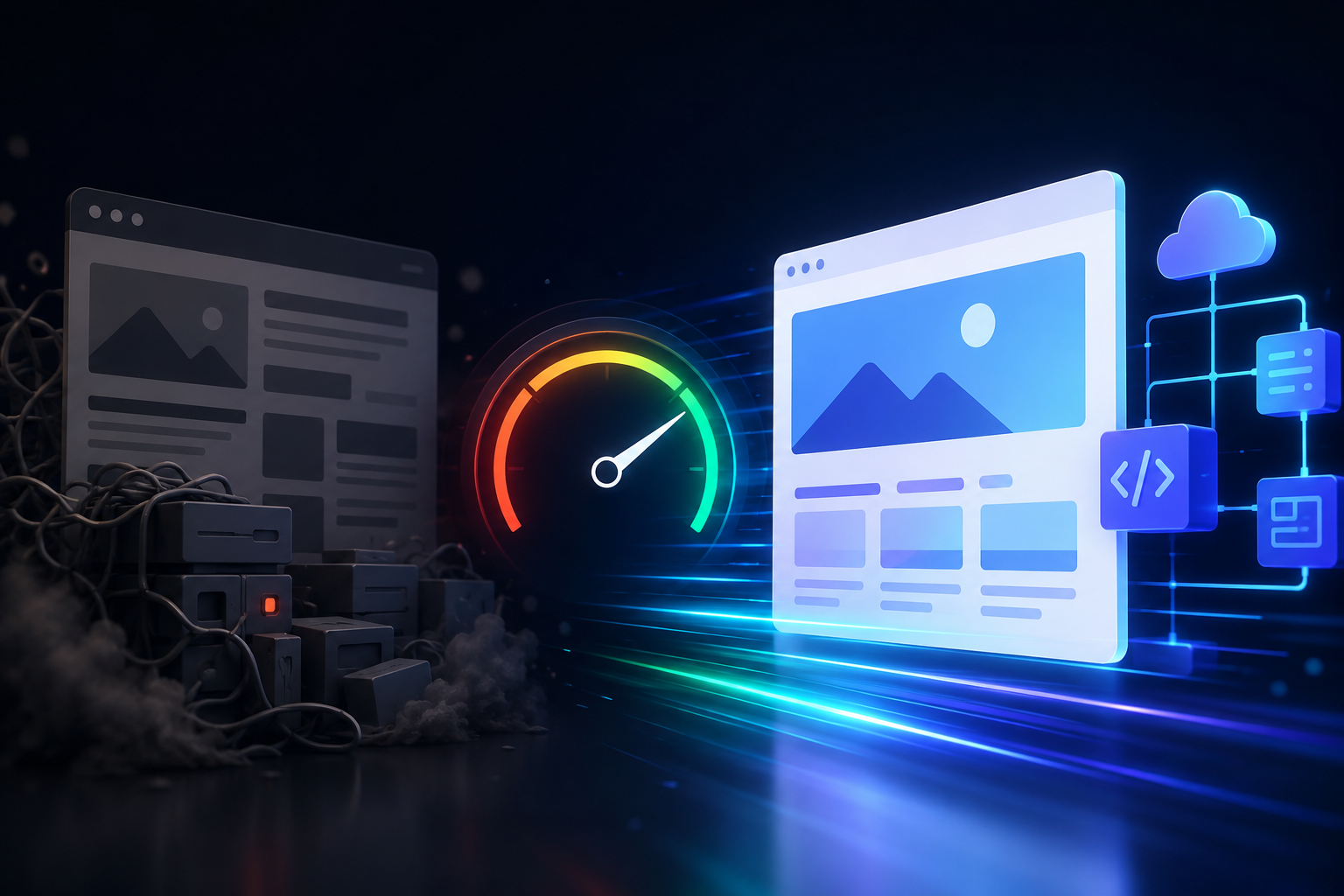
Most websites still rely on bulky templates that slow down load times and hurt rankings. You’ve probably seen how frustrating it is when your page speed doesn’t meet Google’s Core Web Vitals standards. Custom web design performance with headless architecture SEO offers a clear path to faster, more reliable sites that deliver real results. Let’s explore why this approach is becoming essential for enterprise technical SEO and page speed optimization.
Understanding Headless Architecture SEO
Headless architecture SEO represents a fundamental shift in how we build and deliver web content. Traditional content management systems couple the front-end presentation layer with the back-end content repository, creating dependencies that often result in performance bottlenecks. The headless approach separates these concerns entirely, allowing your development team to build lightning-fast front ends while maintaining flexible content management capabilities.
This separation creates immediate advantages for enterprise technical SEO. Your content remains accessible through APIs, while your presentation layer can be built using modern frameworks optimized for speed and performance. The result is a website that loads faster, responds quicker, and satisfies both users and search engines.
The Technical Foundation of Decoupled Architecture Benefits
Decoupled architecture benefits extend far beyond simple performance gains. When you separate your content layer from your presentation layer, you gain complete control over how your site renders and delivers information to users. This control translates directly into better core web vitals optimization scores.
Your development team can choose the most appropriate front-end framework for your specific needs. Whether that’s React, Vue, Svelte, or another modern solution, the choice becomes purely about performance and user experience rather than being constrained by CMS limitations. This freedom allows for precise tuning of every aspect of page delivery.
The API-first approach also means your content can serve multiple channels simultaneously. Your website, mobile applications, and third-party integrations all draw from the same content source, ensuring consistency while allowing each channel to optimize its own delivery method.
Core Web Vitals Optimization Through Custom Development
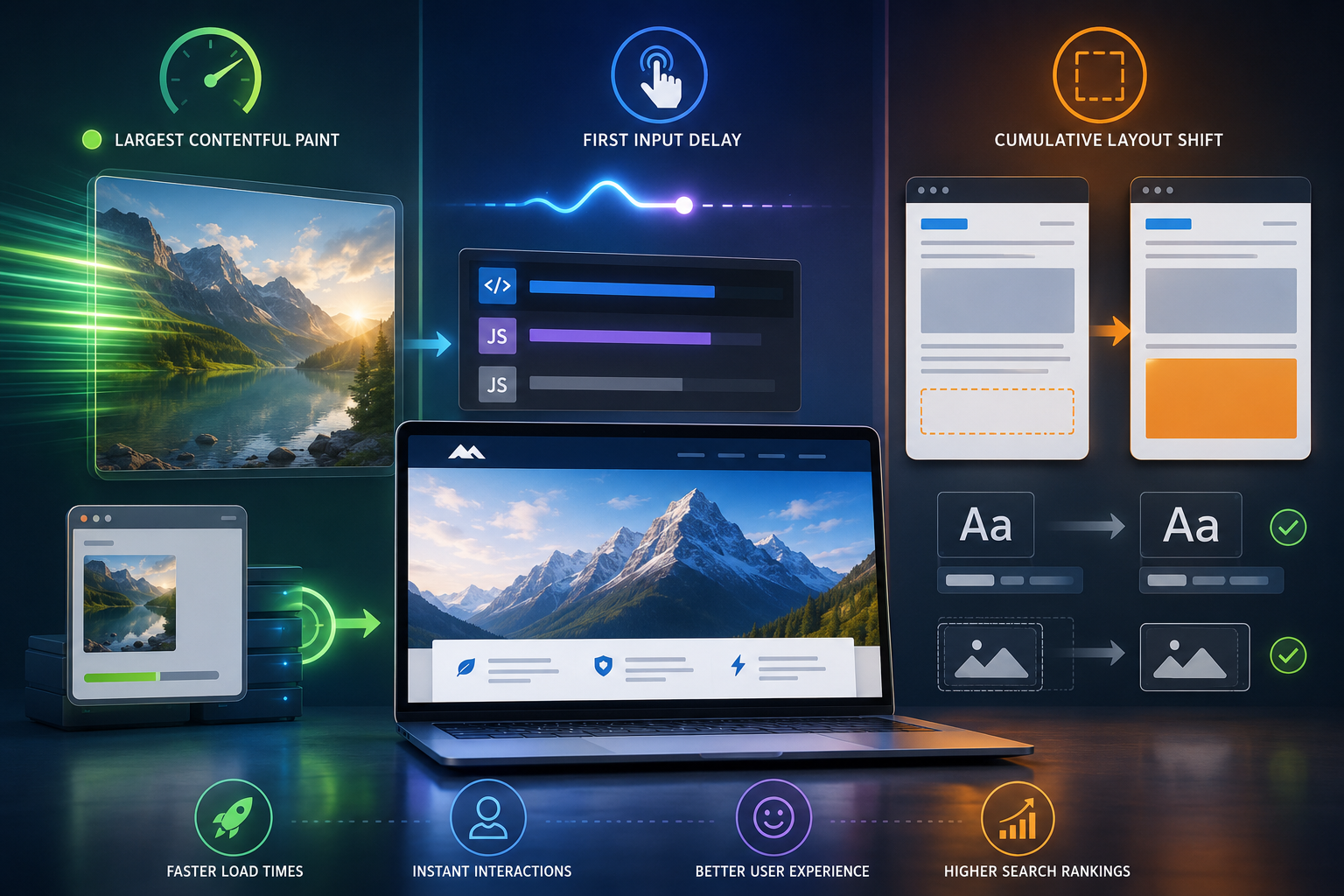
Core web vitals optimization has become a critical ranking factor that directly impacts your search visibility. Google measures three specific metrics: Largest Contentful Paint (LCP), First Input Delay (FID), and Cumulative Layout Shift (CLS). Each metric captures a different aspect of user experience, and all three require careful attention in modern web development.
Custom web design performance shines when addressing these metrics because you control every aspect of how pages load and render. Generic templates often include unnecessary code, oversized images, and poorly optimized scripts that drag down these scores. Custom development eliminates this waste entirely.
Largest Contentful Paint Strategies
LCP measures how quickly the largest visible element loads on your page. In traditional CMS environments, this metric suffers because of render-blocking resources, unoptimized images, and slow server response times. Headless architecture SEO solves these problems through strategic implementation choices.
Static site generation becomes possible when your front end is decoupled from your content management system. Pages can be pre-rendered at build time, meaning users receive fully formed HTML that displays immediately. This approach typically achieves LCP scores under 1.2 seconds, well within Google’s recommended threshold.
Image handling improves dramatically with custom web development SEO approaches. You can implement modern formats like WebP and AVIF automatically, serve appropriately sized images based on device characteristics, and lazy load content that appears below the fold. These techniques reduce initial payload size and accelerate the display of critical content.
First Input Delay Reduction
FID measures the time between when a user first interacts with your page and when the browser can actually respond to that interaction. Heavy JavaScript execution blocks the main thread and creates poor FID scores. Custom web design performance addresses this through careful code splitting and progressive enhancement.
Your development team can analyze exactly which JavaScript is necessary for initial page render and which can be deferred or loaded on demand. This granular control is rarely possible with template-based solutions that bundle everything together regardless of when it’s actually needed.
Service workers become practical in headless environments, allowing you to cache resources strategically and respond to user interactions even when JavaScript is still parsing. This creates a perception of instant responsiveness that dramatically improves user satisfaction.
Cumulative Layout Shift Prevention
CLS measures visual stability by tracking unexpected layout shifts during page load. Advertisements, embedded content, and dynamically injected elements commonly cause poor CLS scores. Enterprise technical SEO requires eliminating these shifts to maintain both rankings and user trust.
Custom development allows you to reserve space for all dynamic elements before they load. You know the dimensions of your images, advertisements, and embedded content, so you can allocate that space in your initial HTML. Users see a stable page that doesn’t jump around as resources load.
Font loading strategies also improve when you have complete control over your front end. You can use font-display: swap with appropriate fallback fonts that match your web fonts’ metrics, preventing text from shifting when custom fonts load.
Page Speed Optimization at the Infrastructure Level
Page speed optimization extends beyond code to encompass your entire delivery infrastructure. Headless architecture SEO enables deployment patterns that were previously difficult or impossible with traditional CMS platforms.
Content Delivery Networks and Edge Computing
CDN integration becomes straightforward when your front end consists of static files or server-rendered pages. These files can be distributed to edge locations worldwide, ensuring users always receive content from geographically nearby servers. Latency drops dramatically, and Time to First Byte (TTFB) improves across all markets.
Edge computing takes this concept further by running server-side logic at CDN edge locations. You can personalize content, perform A/B tests, and handle authentication at the edge while maintaining the speed benefits of globally distributed infrastructure. This capability is particularly valuable for enterprise technical SEO where personalization and testing are ongoing requirements.
Database Query Performance
Traditional CMS platforms execute database queries on every page request, creating performance variability and scaling challenges. Headless architecture SEO separates content retrieval from page delivery, allowing you to optimize each independently.
Your content API can implement aggressive caching strategies because content changes less frequently than pages are requested. GraphQL APIs enable precise data fetching, requesting only the specific fields needed for each page rather than retrieving entire content objects. These optimizations reduce database load and accelerate response times.
Build-Time Rendering Strategies
Static site generation at build time represents one of the most powerful decoupled architecture benefits. Your entire site can be pre-rendered as HTML files that require no server processing to deliver. This approach achieves the absolute fastest possible page loads because there’s no computation happening at request time.
For sites with thousands or millions of pages, incremental static regeneration offers a middle ground. You can pre-render your most important pages while generating others on demand and caching the results. This strategy balances build time constraints with performance requirements.
Custom Web Development SEO Best Practices
Custom web development SEO requires attention to technical details that template-based solutions often handle poorly or ignore entirely. Your development team must implement these practices deliberately to achieve optimal results.
Structured Data Implementation
Search engines rely on structured data to understand your content and display rich results. Custom development allows you to generate perfect schema markup tailored to your specific content types. You can ensure every page includes appropriate structured data without relying on plugins or extensions that may generate incorrect or incomplete markup.
JSON-LD structured data can be generated programmatically based on your content model, ensuring consistency and completeness. Product pages receive Product schema, articles get Article schema, and local business pages include LocalBusiness markup. This precision improves your visibility in search results and enables rich snippets that increase click-through rates.
Mobile-First Rendering
Google’s mobile-first indexing means your mobile experience determines your rankings. Custom web design performance prioritizes mobile users by default, ensuring the mobile experience is not an afterthought but the primary focus of development efforts.
Responsive design becomes truly adaptive when you control the entire rendering pipeline. You can serve different image sizes, adjust layout complexity, and even modify content presentation based on device capabilities. This level of adaptation ensures every user receives an experience optimized for their specific context.
URL Structure and Internal Linking
Clean URL structures and logical internal linking hierarchies contribute to both user experience and search performance. Headless architecture SEO gives you complete control over routing and link generation, allowing you to implement ideal URL patterns without CMS constraints.
Your routing logic can implement canonical URLs automatically, handle redirects efficiently, and generate XML sitemaps that accurately reflect your site structure. Internal linking can be optimized programmatically based on content relationships, ensuring link equity flows to your most important pages.
Enterprise Technical SEO Considerations
Enterprise technical SEO involves challenges that small sites rarely encounter. Scale, complexity, and organizational constraints all require careful planning and execution.
Multi-Site and Multi-Language Support
Large organizations often operate multiple websites or serve content in multiple languages. Headless architecture SEO excels in these scenarios because your content repository can serve multiple front ends simultaneously.
Each market or brand can have its own optimized front end while sharing content infrastructure. Translation workflows integrate cleanly through the API layer, and you can ensure hreflang tags are implemented correctly across all language variants. This approach reduces duplication while maintaining the flexibility to customize each site’s presentation.
Security and Performance Balance
Security requirements often conflict with performance goals. Authentication, authorization, and data protection all introduce processing overhead that can slow page delivery. Custom web development SEO allows you to implement security at the appropriate layer without compromising front-end performance.
Your content API can handle authentication and authorization, ensuring only appropriate users can access restricted content. The front end remains fast because security checks happen during content retrieval rather than page rendering. This separation protects sensitive data while maintaining excellent user experience for public content.
A/B Testing and Personalization
Enterprise organizations require sophisticated testing and personalization capabilities. Headless architecture SEO supports these requirements through edge computing and API-driven content delivery.
You can implement A/B tests at the edge, serving different variants to different user segments without impacting page speed. Personalization logic runs on fast edge servers, modifying content based on user characteristics while maintaining the performance benefits of static or cached content.
Measuring and Monitoring Performance
Page speed optimization is not a one-time effort but an ongoing process requiring continuous measurement and refinement. Custom web design performance enables sophisticated monitoring that helps you identify and address issues proactively.
Real User Monitoring
Real User Monitoring (RUM) captures actual performance metrics from real users visiting your site. This data reveals how your site performs across different devices, networks, and geographic locations. Core web vitals optimization requires this real-world data because lab testing cannot capture the full range of user experiences.
Your custom front end can implement RUM through the Performance API, sending metrics to your analytics platform for analysis. You can segment performance data by device type, connection speed, geographic region, and user journey to identify specific areas needing improvement.
Synthetic Monitoring and Alerting
Synthetic monitoring complements RUM by testing your site from controlled environments at regular intervals. This approach detects performance regressions quickly, alerting your team before users are significantly impacted.
You can establish performance budgets for key metrics and receive alerts when builds exceed these thresholds. This proactive approach prevents performance degradation from accumulating over time as new features are added.
Core Web Vitals Tracking
Google Search Console provides field data for core web vitals, showing how your pages perform for actual users. This data directly impacts your rankings, making it the most important performance metric to track.
Custom development allows you to correlate Search Console data with your own monitoring, identifying which specific code changes impact core web vitals scores. This correlation enables data-driven decisions about which performance improvements will have the greatest impact on search visibility.
Migration Strategies for Existing Sites
Moving from a traditional CMS to headless architecture SEO requires careful planning and execution. The complexity of this migration varies based on your current platform, content volume, and organizational constraints.
Content Migration and Modeling
Your existing content must be mapped to a new content model that supports headless delivery. This process often reveals opportunities to improve content structure, eliminate redundancy, and establish better relationships between content types.
API-first content models force you to think clearly about what information each content type contains and how it relates to other content. This clarity improves both content management efficiency and the quality of rendered pages.
Phased Rollout Approaches
Enterprise technical SEO migrations should proceed gradually to minimize risk. You can implement headless architecture for new sections of your site while maintaining existing systems for established content. This phased approach allows your team to gain experience with the new architecture while limiting potential negative impacts.
URL mapping ensures that migrated content maintains its search equity. Proper redirects, canonical tags, and XML sitemap updates guide search engines through the transition smoothly.
Team Training and Capability Building
Headless architecture requires different skills than traditional CMS development. Your team needs expertise in API design, modern JavaScript frameworks, and deployment automation. Investing in training ensures your organization can maintain and extend the system effectively.
Documentation becomes critical in decoupled environments where front-end and back-end teams work independently. Clear API documentation, content model specifications, and deployment procedures enable efficient collaboration.
Long-Term Performance Sustainability
Custom web design performance delivers immediate benefits, but maintaining those benefits requires ongoing attention and discipline. Establishing processes that prevent performance regression ensures your investment continues delivering results.
Performance Budgets and Governance
Performance budgets establish clear limits on page weight, JavaScript execution time, and other metrics that impact user experience. Your development process should enforce these budgets, rejecting changes that exceed established thresholds.
Automated testing can verify that new code meets performance standards before deployment. This testing catches problems early when they are easier and less expensive to fix.
Continuous Improvement Processes
Web performance is not static. Browser capabilities evolve, user expectations increase, and new best practices emerge. Your organization needs processes for staying current with these changes and implementing improvements regularly.
Regular performance audits identify opportunities for enhancement. These audits should examine both technical metrics and business outcomes, ensuring performance improvements translate into better user engagement and conversion rates.
Technology Evolution and Updates
The frameworks and tools that power your headless front end will evolve over time. Staying current with updates ensures you benefit from performance improvements, security patches, and new capabilities.
Your architecture should support incremental updates rather than requiring complete rewrites. This approach allows you to adopt new technologies gradually while maintaining system stability.
Business Impact of Performance Excellence
Page speed optimization and core web vitals optimization deliver measurable business value beyond improved search rankings. Faster sites convert better, engage users more effectively, and reduce infrastructure costs.
Conversion Rate Improvements
Research consistently shows that faster sites convert at higher rates. Even small improvements in load time can produce significant increases in conversion rates, particularly for e-commerce and lead generation sites.
Custom web design performance enables you to achieve load times that were previously impossible with template-based solutions. These improvements directly impact revenue and customer acquisition costs.
User Engagement Metrics
Page speed affects how users interact with your content. Faster sites see lower bounce rates, longer session durations, and higher pages per session. These engagement signals contribute to search rankings while also indicating better user satisfaction.
Headless architecture SEO creates experiences that encourage exploration and engagement. Users who don’t wait for pages to load are more likely to view multiple pages and take desired actions.
Infrastructure Cost Reduction
Decoupled architecture benefits include reduced server costs. Static files and cached content require far less computational resources to serve than dynamically generated pages. This efficiency translates directly into lower hosting costs, particularly at enterprise scale.
Your infrastructure can handle traffic spikes more gracefully when most requests are served from cache or CDN edge locations. This resilience reduces the need for expensive over-provisioning to handle peak loads.
Competitive Advantages Through Technical Excellence
Enterprise technical SEO creates sustainable competitive advantages that are difficult for competitors to replicate. Organizations that invest in custom web development SEO establish technical foundations that support growth and adaptation.
Market Differentiation
Superior performance becomes a brand differentiator in markets where most competitors rely on slow, template-based sites. Users notice and appreciate fast, responsive experiences, building positive associations with your brand.
Search engines reward fast sites with better rankings, creating a virtuous cycle where performance improvements drive more traffic, which justifies further investment in performance.
Adaptation to Algorithm Changes
Google regularly updates its ranking algorithms, often with increased emphasis on user experience signals. Sites built on headless architecture SEO foundations adapt more easily to these changes because they already prioritize performance and user experience.
Your custom development approach allows rapid response to algorithm updates. When Google announces new ranking factors, your team can implement necessary changes without being constrained by CMS limitations.
Future-Proofing Your Digital Presence
Technology continues advancing rapidly. New devices, network protocols, and user expectations will emerge. Headless architecture positions your organization to adopt these advances quickly because your front end can evolve independently of your content infrastructure.
This flexibility protects your investment by ensuring your platform can adapt to future requirements without requiring complete rebuilds.
Getting Started with Headless Architecture
Moving to headless architecture SEO represents a significant commitment, but the benefits justify the investment for organizations serious about digital performance. Your first steps should focus on building understanding, establishing goals, and creating a realistic roadmap.
Assessment and Planning
Begin by thoroughly assessing your current platform’s performance and limitations. Identify specific pain points that headless architecture would address. Quantify the business impact of these problems to build a compelling case for change.
Define clear success metrics before beginning development. These metrics should include both technical measures like core web vitals scores and business outcomes like conversion rates and revenue.
Technology Selection
Choose content management and front-end technologies that align with your team’s capabilities and your specific requirements. The headless CMS market offers many options, each with different strengths. Your front-end framework choice should balance performance requirements with developer productivity.
Proof of concept projects help validate technology choices before committing to full-scale implementation. These projects reveal integration challenges and help your team gain experience with new tools.
Building Internal Capabilities
Success with custom web development SEO requires appropriate skills and resources. Assess your team’s current capabilities and identify gaps that need to be filled through hiring or training.
Consider partnering with specialists who have deep experience in headless architecture implementation. This partnership accelerates your learning while reducing the risk of costly mistakes during initial implementation.
The path to superior custom web design performance through headless architecture SEO requires commitment and expertise, but the results speak for themselves. Organizations that make this investment position themselves for sustained success in increasingly competitive digital markets. Your site’s performance directly impacts every aspect of your digital presence, from search rankings to user satisfaction to conversion rates. Taking control of that performance through custom development creates advantages that compound over time, establishing technical foundations that support growth and adaptation for years to come.
Frequently Asked Questions
What makes headless architecture better for Core Web Vitals than traditional CMS platforms?
Headless architecture separates your content management from your presentation layer, giving you complete control over how pages render and deliver content. This separation allows you to implement static site generation, optimize JavaScript execution, and eliminate render-blocking resources that traditional CMS platforms often bundle together. The result is faster LCP, better FID, and improved CLS scores because every aspect of page delivery is optimized for performance rather than constrained by CMS limitations.
How long does it take to see SEO improvements after migrating to headless architecture?
Most organizations see measurable improvements in Core Web Vitals scores within 2-4 weeks after migration as Google recrawls and reassesses pages. Search ranking improvements typically follow 6-12 weeks later as the algorithm incorporates these performance signals into rankings. The exact timeline depends on your site’s crawl frequency, the magnitude of performance improvements, and competitive dynamics in your market.
Can headless architecture support enterprise-scale sites with millions of pages?
Yes, headless architecture actually scales better than traditional CMS platforms for large sites. Incremental static regeneration allows you to pre-render important pages while generating others on demand and caching the results. Your content API can be optimized independently of your front end, and CDN distribution ensures fast delivery regardless of site size. Many enterprise organizations successfully operate headless sites with millions of pages while maintaining excellent performance.
What are the main costs involved in implementing headless architecture?
Implementation costs include development time for building your custom front end, content migration and modeling work, infrastructure setup for hosting and CDN, and team training on new tools and processes. Ongoing costs typically include hosting fees (often lower than traditional CMS hosting), content API licensing, and development resources for maintenance and enhancements. While initial investment is substantial, reduced server costs and improved conversion rates often produce positive ROI within 12-18 months.
Do I need to rebuild my entire site at once or can I migrate gradually?
Gradual migration is not only possible but recommended for enterprise sites. You can implement headless architecture for new site sections while maintaining your existing CMS for established content. This phased approach reduces risk, allows your team to gain experience with the new architecture, and minimizes potential negative impacts on search rankings. Many organizations successfully run hybrid environments during multi-year migration projects.
How Elevated Marketing can help
We do this work every day for businesses in Indianapolis, the DC & Virginia metro, and nationwide.
→ Website Security & Monitoring→ SEO & GEO Services→ Managed Web Hosting→ More on UncategorizedGet a free audit