

Credential stuffing attacks target your admin panel with relentless login attempts, often flying under the radar until damage is done. You’re left guessing which accounts are safe while bots hammer away, risking data breaches and downtime. Continuous login monitoring offers precise credential stuffing prevention and brute force login protection to keep your enterprise web access control tight without slowing down your team.
Understanding the Threat Landscape
The Growing Menace of Automated Attacks
Organizations face mounting pressure from cybercriminals who deploy sophisticated botnets to compromise user accounts. These attacks exploit stolen credentials from previous data breaches, testing username and password combinations across multiple platforms. The scale of these operations is staggering, with millions of login attempts occurring daily across enterprise systems.
Credential stuffing differs from traditional brute force attacks in its approach. While brute force methods systematically try various password combinations for a single account, credential stuffing leverages vast databases of leaked credentials. Attackers know that users often reuse passwords across multiple services, making this method frighteningly effective.
Why Traditional Security Measures Fall Short
Legacy security systems often rely on periodic audits or simple rate limiting that fails to detect sophisticated automated bot login defense scenarios. Attackers have evolved their techniques to evade basic protections, distributing attacks across multiple IP addresses and throttling request rates to appear legitimate.
Your firewall may block obvious threats, but modern botnets operate with surgical precision. They mimic human behavior patterns, introduce random delays between attempts, and rotate through proxy servers. This makes distinguishing between legitimate users and malicious actors increasingly difficult without specialized monitoring tools.
The Critical Role of Continuous Login Monitoring

Real-Time Threat Detection
Continuous login monitoring represents a paradigm shift in admin panel security monitoring. Rather than waiting for quarterly security reviews or reacting after breaches occur, this approach analyzes every authentication attempt in real time. The system evaluates multiple data points simultaneously, including geographic location, device fingerprints, login velocity, and behavioral patterns.
This constant vigilance enables your security team to identify anomalies as they happen. When a bot attempts to access your admin panel using stolen credentials, the monitoring system flags the suspicious activity immediately. You gain actionable intelligence that allows for swift intervention before damage occurs.
Behavioral Analysis and Pattern Recognition
Advanced monitoring solutions employ machine learning algorithms that establish baseline behavior for each user account. The system learns normal login times, preferred devices, typical geographic locations, and navigation patterns. Any deviation from these established norms triggers alerts for further investigation.
This behavioral approach proves particularly effective for credential stuffing prevention because automated attacks exhibit distinct patterns. Bots may attempt logins from multiple geographic regions within minutes, use outdated browser configurations, or demonstrate inhuman speed in form completion. These telltale signs become immediately apparent to sophisticated monitoring systems.
Key Components of Effective Login Monitoring
Multi-Factor Authentication Integration
Strong enterprise web access control requires layers of defense working in concert. Continuous monitoring pairs exceptionally well with multi-factor authentication (MFA), creating a formidable barrier against unauthorized access. When the monitoring system detects suspicious login attempts, it can automatically trigger additional authentication requirements.
This adaptive approach balances security with user experience. Legitimate users logging in from recognized devices and locations proceed smoothly, while suspicious attempts face heightened scrutiny. Your team maintains productivity while your systems remain protected against automated threats.
Anomaly Detection and Risk Scoring
Modern monitoring platforms assign risk scores to each login attempt based on numerous factors. The system evaluates IP reputation, device trust level, time since last successful login, and consistency with historical patterns. High-risk attempts can be automatically blocked or routed through additional verification steps.
This risk-based approach provides nuanced brute force login protection that simple threshold-based systems cannot match. Rather than blocking all traffic after a fixed number of failed attempts, the system considers context. A traveling executive logging in from a new location receives different treatment than a bot cycling through stolen credentials.
Comprehensive Logging and Forensics
Detailed logging capabilities form the foundation of effective admin panel security monitoring. Every authentication attempt, whether successful or failed, generates records that security teams can analyze. These logs prove invaluable for identifying attack patterns, conducting post-incident investigations, and meeting compliance requirements.
The forensic value of comprehensive logs extends beyond immediate threat response. Patterns emerge over time that inform security policy updates and help predict future attack vectors. Your organization builds institutional knowledge about the specific threats targeting your systems.
Implementation Strategies for Maximum Protection
Establishing Baseline Security Metrics
Before deploying continuous monitoring, organizations must establish clear baselines for normal authentication activity. This involves analyzing historical login data to understand typical patterns across different user groups. Administrators may exhibit different behaviors than standard users, requiring customized monitoring parameters.
Document your current authentication volumes, peak usage times, and common access points. This baseline data enables you to configure monitoring thresholds that minimize false positives while maintaining high sensitivity to genuine threats. Proper calibration ensures your security team focuses on real threats rather than chasing benign anomalies.
Gradual Rollout and Testing
Implement continuous monitoring in phases to minimize disruption to legitimate users. Begin with observation mode, where the system logs and analyzes activity without taking enforcement actions. This testing period allows you to refine detection rules and verify that legitimate access patterns are not flagged as suspicious.
Once confident in the system’s accuracy, enable automated responses for clear-cut threats while maintaining manual review for borderline cases. This graduated approach builds confidence among stakeholders and allows your security team to develop expertise with the new tools.
Integration with Existing Security Infrastructure
Your monitoring solution should complement existing security measures rather than operating in isolation. Integration with Security Information and Event Management (SIEM) systems provides centralized visibility across your entire security ecosystem. Correlating login data with other security events reveals attack campaigns that might otherwise go unnoticed.
API connectivity enables automated responses coordinated across multiple security tools. When monitoring detects a credential stuffing attack, it can trigger firewall rules, update threat intelligence feeds, and alert relevant personnel simultaneously. This orchestrated response dramatically reduces the window of vulnerability.
Advanced Techniques for Automated Bot Login Defense
Device Fingerprinting and Recognition
Modern monitoring systems collect detailed information about devices attempting authentication. Browser versions, operating systems, screen resolutions, installed fonts, and dozens of other attributes combine to create unique device fingerprints. Legitimate users typically access systems from a small number of recognized devices, while bots exhibit constantly changing configurations.
Device fingerprinting provides credential stuffing prevention even when attackers possess valid credentials. If the monitoring system detects a correct username and password combination coming from an unrecognized device with suspicious characteristics, it can require additional verification before granting access.
Velocity Checking and Rate Analysis
Velocity checking monitors the speed and frequency of authentication attempts across multiple dimensions. The system tracks login attempts per account, per IP address, per device, and across the entire organization. Sudden spikes in any category trigger alerts and protective measures.
This multi-dimensional approach catches sophisticated attacks that evade simple rate limiting. Distributed botnets may stay below per-IP thresholds, but velocity checking across all accounts reveals the coordinated nature of the attack. Your brute force login protection adapts to the tactics employed by modern threat actors.
CAPTCHA and Challenge-Response Mechanisms
When monitoring systems detect suspicious patterns, they can dynamically insert CAPTCHA challenges or other human verification tests. These mechanisms disrupt automated attacks while imposing minimal friction on legitimate users. The key lies in selective deployment based on risk assessment rather than blanket application.
Advanced implementations employ invisible challenges that verify human interaction without explicit user action. Mouse movement patterns, scrolling behavior, and timing analysis distinguish humans from bots without requiring users to solve puzzles or identify traffic lights.
Measuring Success and Continuous Improvement
Key Performance Indicators
Track specific metrics to evaluate your monitoring program’s effectiveness. Monitor the number of blocked credential stuffing attempts, false positive rates, time to detect attacks, and time to respond. These quantitative measures demonstrate the value of your security investments and identify areas for refinement.
Compare pre-implementation and post-implementation breach rates, unauthorized access incidents, and help desk tickets related to account compromises. Successful enterprise web access control should show measurable improvements across all these dimensions.
Regular Tuning and Optimization
Threat actors constantly evolve their techniques, requiring corresponding evolution in your defenses. Schedule regular reviews of monitoring rules and detection thresholds. Analyze false positives to identify overly aggressive rules that frustrate legitimate users. Examine missed detections to understand gaps in coverage.
Engage your security team in continuous learning about emerging attack methods. Threat intelligence feeds provide early warning of new tactics, allowing proactive rule updates before attacks reach your systems. This forward-looking approach maintains strong admin panel security monitoring despite changing threat conditions.
User Education and Awareness
Technical controls provide essential protection, but user behavior remains a critical factor. Educate employees about password security, the dangers of credential reuse, and the importance of reporting suspicious account activity. Users who understand the threats become partners in defense rather than weak links.
Regular training sessions keep security awareness high and reinforce best practices. Share anonymized examples of blocked attacks to demonstrate the real threats facing your organization. This transparency builds support for security measures and encourages compliance with policies.
Business Benefits Beyond Security
Protecting Reputation and Customer Trust
Data breaches damage organizational reputation and erode customer confidence. News of compromised accounts spreads quickly, potentially costing your business valuable relationships and revenue. Proactive credential stuffing prevention demonstrates commitment to protecting stakeholder interests.
Customers increasingly evaluate vendors based on security posture. Strong authentication protections become competitive differentiators that win contracts and retain clients. Your investment in continuous monitoring pays dividends through enhanced market position.
Regulatory Compliance and Risk Management
Many industries face strict regulations regarding data protection and access controls. Continuous login monitoring helps satisfy requirements for authentication security, audit trails, and incident detection. Comprehensive logs provide evidence of due diligence during compliance audits.
Beyond checkbox compliance, effective monitoring reduces the financial and operational risks associated with security incidents. The costs of breach response, legal liabilities, and regulatory fines dwarf the investment in preventive measures. Sound brute force login protection represents prudent risk management.
Operational Efficiency and Resource Allocation
Automated monitoring systems handle the heavy lifting of threat detection, freeing security personnel for higher-value activities. Rather than manually reviewing logs or responding to every failed login, your team focuses on genuine threats and strategic security initiatives.
This efficiency gain becomes particularly valuable as organizations scale. Manual security processes that work for small deployments become unsustainable as user bases grow. Continuous monitoring scales effortlessly, maintaining protection levels regardless of organization size.
Selecting the Right Monitoring Solution
Essential Features and Capabilities
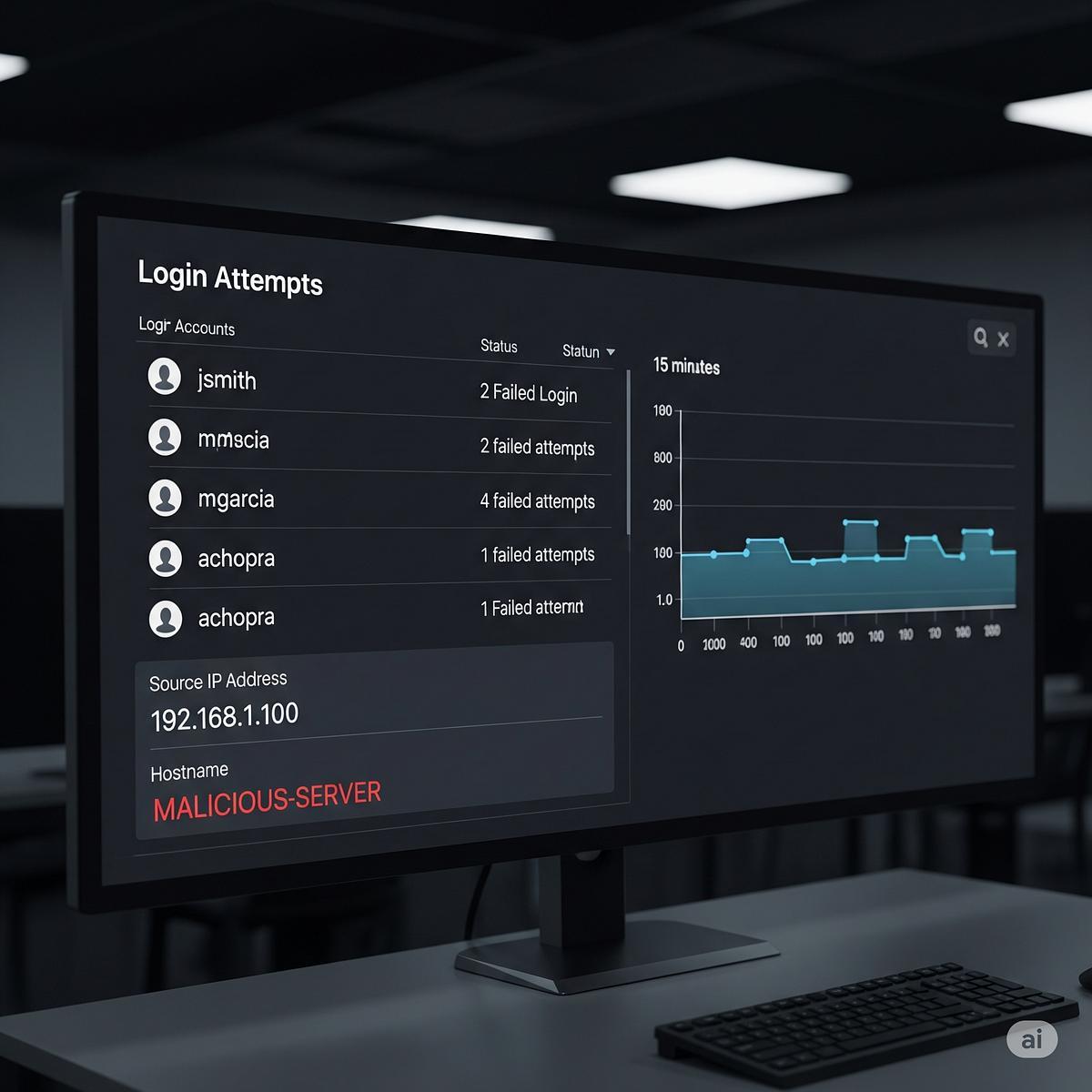
Evaluate potential solutions based on detection accuracy, response speed, integration capabilities, and reporting functionality. The system should provide real-time alerts, detailed forensic data, and intuitive dashboards for security teams. Look for solutions that support your specific authentication protocols and infrastructure.
Consider scalability requirements carefully. Your monitoring solution must handle current authentication volumes while accommodating future growth. Cloud-based solutions often provide better scalability than on-premises deployments, though hybrid approaches may suit some organizations.
Vendor Evaluation Criteria
Assess vendor expertise in credential stuffing prevention and automated bot login defense. Request case studies demonstrating success with organizations similar to yours. Evaluate the vendor’s threat research capabilities and frequency of detection rule updates.
Support quality proves critical for security tools. Ensure the vendor provides responsive technical support and maintains detailed documentation. Security incidents do not respect business hours, making 24/7 support availability an important consideration.
Total Cost of Ownership
Look beyond initial licensing fees to understand the complete financial picture. Consider implementation costs, ongoing maintenance requirements, training expenses, and potential infrastructure upgrades. Factor in the value of prevented breaches when calculating return on investment.
Some solutions offer flexible pricing models based on user counts or authentication volumes. Choose a pricing structure that aligns with your organization’s growth trajectory and budget predictability requirements.
Building a Culture of Security
Executive Sponsorship and Organizational Buy-In
Successful security programs require support from leadership. Present the business case for continuous monitoring in terms executives understand: risk reduction, compliance, customer trust, and competitive advantage. Quantify the potential costs of breaches versus the investment in prevention.
Secure budget allocation and policy authority to implement necessary changes. Executive sponsorship smooths the path for security initiatives that may require process changes or temporary disruption during implementation.
Cross-Functional Collaboration
Effective admin panel security monitoring touches multiple departments. IT operations manages infrastructure, development teams integrate authentication systems, and human resources handles employee onboarding and offboarding. Foster collaboration among these groups to ensure comprehensive protection.
Regular cross-functional meetings keep all stakeholders informed about security initiatives and threat developments. This coordination prevents gaps where responsibilities are unclear and ensures consistent application of security policies.
Incident Response Planning
Even the best preventive measures cannot guarantee absolute security. Develop detailed incident response plans that specify actions when monitoring systems detect attacks. Define roles, communication protocols, escalation procedures, and recovery steps.
Conduct regular tabletop exercises that simulate credential stuffing attacks and other scenarios. These drills identify weaknesses in response plans and build muscle memory for security teams. Practice reduces response time when real incidents occur.
The Path Forward
Cyber threats continue growing in sophistication and scale. Organizations that rely on reactive security measures find themselves perpetually behind attackers. Continuous login monitoring shifts the balance, providing proactive enterprise web access control that anticipates and neutralizes threats before they cause harm.
Your investment in comprehensive monitoring capabilities protects not just systems and data, but the trust stakeholders place in your organization. The technical implementation represents just one component of a broader security culture that values vigilance, adaptation, and continuous improvement.
Begin your journey toward stronger authentication security by assessing current vulnerabilities and establishing clear security objectives. Engage stakeholders across your organization to build support for necessary changes. Select monitoring solutions that match your technical requirements and organizational culture.
The threat from credential stuffing and brute force attacks will not diminish. Attackers possess vast resources and strong motivation to breach your defenses. Meeting this challenge requires commitment to security excellence and willingness to adopt advanced protective measures. Continuous login monitoring provides the foundation for that defense, delivering the visibility, control, and rapid response capabilities modern security demands.
Your organization’s future success depends on maintaining the trust of customers, partners, and employees. That trust rests partly on your ability to protect their data and accounts from unauthorized access. Strong authentication security is not optional in today’s threat environment. It is a fundamental requirement for sustainable business operations.
Take action now to strengthen your defenses. Evaluate your current authentication security posture, identify gaps, and develop a roadmap for implementing continuous monitoring. The investment you make today in credential stuffing prevention and brute force login protection will pay dividends for years to come through avoided breaches, maintained reputation, and sustained business growth.
Frequently Asked Questions
What is the difference between credential stuffing and brute force attacks?
Credential stuffing uses lists of stolen username and password combinations from previous data breaches, testing them across multiple platforms. Brute force attacks systematically try different password combinations for a single account, often using common passwords or dictionary words. Credential stuffing succeeds more often because it exploits password reuse across services.
How quickly can continuous login monitoring detect an attack?
Real-time monitoring systems analyze authentication attempts instantly, typically detecting suspicious patterns within seconds or minutes of attack initiation. The exact detection speed depends on attack sophistication and monitoring system configuration. Advanced systems using behavioral analysis can identify anomalies on the first suspicious login attempt.
Will login monitoring slow down the authentication process for legitimate users?
Properly configured monitoring adds negligible latency to authentication, typically measured in milliseconds. Most analysis occurs in the background without impacting user experience. Only when the system detects high-risk patterns does it introduce additional verification steps, and these apply selectively based on risk assessment rather than to all users.
How does continuous monitoring integrate with existing security tools?
Modern monitoring solutions offer API connectivity and support for standard security protocols, allowing integration with SIEM platforms, identity management systems, and firewalls. This integration enables centralized security visibility and coordinated automated responses across your entire security infrastructure. Most enterprise solutions provide pre-built connectors for popular security platforms.
What metrics should we track to measure monitoring effectiveness?
Track the number of blocked credential stuffing attempts, false positive rates, mean time to detect attacks, and mean time to respond. Monitor trends in failed login attempts, successful blocks by attack type, and user friction metrics. Compare pre-implementation and post-implementation breach rates and unauthorized access incidents to demonstrate program value and identify areas for improvement.
How Elevated Marketing can help
We do this work every day for businesses in Indianapolis, the DC & Virginia metro, and nationwide.
→ Website Security & Monitoring→ SEO & GEO Services→ Managed Web Hosting→ More on UncategorizedGet a free audit